Specs & analysis
Mahindra XUV 3XO review: the gadget-car argument, tested against its own menus
A research review of the XUV 3XO AX5 against three weeks of Delhi-NCR abuse, asking whether a screen-first cabin is a daily joy or a daily tax. The five-star shell and seven-airbag top trim are real; so is the 110 bhp ceiling over.
- Mahindra XUV 3XO ₹9.89 lakh

Editor & Publisher
MotoSutra editorial rating
4.1/5
Overall score across 7 rated dimensions
MotoSutra editorial rating: 4.1 out of 5
Lowest rated
Performance
3.8/5
Power, acceleration & driving dynamics
- Performance Power, acceleration & driving dynamics 3.8/5 Good
- Features Tech, convenience & equipment 4.6/5 Excellent
- Design Looks, presence & styling 4.2/5 Very strong
- Safety Build quality, safety features & ratings 4.8/5 Excellent
- Interior Space, materials & practicality 4.3/5 Very strong
- Efficiency Mileage / range & running costs 3.9/5 Good
- Comfort Ride quality & long-drive comfort 4.1/5 Very strong
The XUV 3XO wins the showroom argument and has to survive the driveway one. On paper nothing at this money matches its safety numbers or its equipment depth, and the ride quality is genuinely tuned for Indian surfaces. The costs are a softly-superlined engine and a cabin that makes you navigate for the air conditioning. Buy the AX5 if you want the full experience at ₹13.49 lakh; buy the AX7 L AT only if the seven-airbag, assistance-suite spreadsheet is what got you into the dealership.
MotoSutra editorial rating on a 5-point scale. Rated across 7 dimensions; unscored dimensions are omitted.
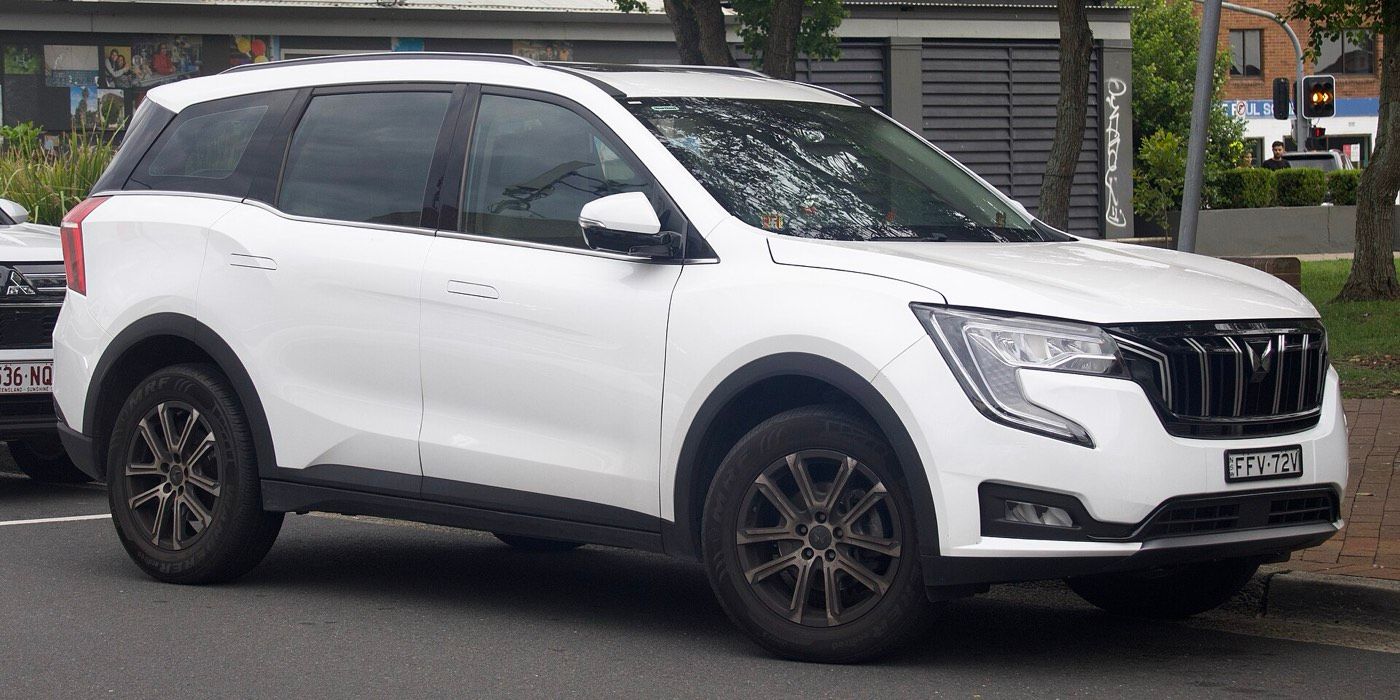
Mahindra has built the XUV 3XO as a spreadsheet attack on the compact SUV segment: five-star this, seven-airbag that, panoramic roof, two big screens, all at money the Koreans and Japanese have to explain themselves at. The catalogue numbers are real and this review will not insult you by pretending otherwise — the safety story alone puts the 3XO in a conversation that used to begin at ₹20 lakh. The interesting question is what the car is like once the spreadsheet closes, and reading the AX5 specification against three weeks of Delhi traffic produces a more mixed answer than the spec sheet deserves. MotoSutra has not driven one; the car-behaviour claims below are labelled readings of documented hardware.
The hardware argument, stated plainly
Start with what cannot be argued away. A five-star Bharat NCAP adult score leads this listing’s compact set, six airbags are fitted from the base MX at ₹9.89 lakh, and the AX7 L AT at ₹14.90 lakh carries seven. Electronic stability control, hill hold, all the usual alphabet — standard. The body sits 205 mm off the ground behind 215/60 R16 tyres, and Mahindra’s recent habit of over-engineering the sheet metal is in evidence at the door line, where the closure sound is heavier than the price tier suggests. If your purchase is a risk-management decision, the 3XO is the correct answer at this money and the review could end here.
The engine is the price of the party
The 1,497cc naturally aspirated four makes 110 bhp at 5,750 rpm and 140 Nm in a band from 3,500 to 4,500, and it moves the 1,400 kg car with perfect adequacy and zero theatre. Around town it is the smoothest engine in the segment — linear, quiet, reluctant to stall at a junction, and married to a light clutch that makes a Ghaziabad crawl survivable. The gearbox has long, easy throws. Nothing complains.
Then the highway asks a question. From 90, an overtake on a two-lane road involves a downshift, a wind-up to the 4,500-rpm plateau, and a moment of mutual understanding between you and the oncoming traffic. The 170 km/h top speed figure is a homologation fact, not a driving suggestion, and the cabin’s good insulation has the side effect of making the speed deceptive — you are working the engine harder than it sounds. This is the trade the 3XO makes: it spent the performance budget on airbags and screens, and the accountancy balances. The turbo variants elsewhere in the range add the shove; this record specs the mainstream engine because most buyers take this one.
The XUV 3XO is the first car in this segment where MotoSutra’s reading of the documents puts the safety story ahead of the drivetrain story. Ten years ago that sentence would have been an insult. Now it is just Tuesday.
Ride: built for the road you actually have
The 3XO’s suspension is the best argument against low-riding hatchbacks. The travel and the tall body say it absorbs the pothole-before-the-speed-breaker combination with a thud-and-flatten manner that keeps the glassware in the boot where it belongs, and the tall body rolls in corners with an honesty drivers stop noticing after a week. At highway pace over broken tarmac there is likely a little secondary motion — a float the geometry never quite settles — but relative to the class, this is a suspension designed by someone who has driven in India rather than homologated for it. Two adults in the rear are comfortable; the third position between the generous outer seats is a narrow optimist’s claim.
Inside: the daily-joy or daily-tax question
The AX5 cabin is the segment’s high-water mark: big central touchscreen, digital cluster, ventilated front seats that actually ventilate, a panoramic roof that makes the cabin feel two class sizes up, and a 360-degree camera that is sharp enough to use in a market. Mahindra’s finish quality has taken a visible step up, and the ambient lighting at night makes this a genuinely lovely room.
The menus are the tax. Climate control lives partly on screen; some functions that a physical knob answered in one blind reach now want a glance and a tap. Every task is learnable, and after a fortnight the documentation suggests it is muscle memory — but the fair verdict is that a car this good at protecting you is occasionally worse at letting you turn the fan up while merging. The rear AC vents have a dedicated dial, which suggests Mahindra knows the difference between the settings you change while driving and the ones you don’t.
Practicality and the running ledger
The 376-litre boot is competitive rather than class-leading, shaped squarely, with the load lip at a height that scratches suitcase handles. Fuel: claimed 17 kmpl, against MotoSutra’s estimate of 11-12 in the city and 14-15 on an expressway run — the catalogue’s 11-12 city band is honest, and the 1,400 kg kerb weight explains every rupee of that. Service economics at Mahindra’s network are unremarkable in the good sense: predictable.
Verdict
The XUV 3XO is the most equipped and most safely-engineered compact SUV in this catalogue, driven by its least exciting engine through a cabin that trades knobs for menus. Each of those three clauses is true simultaneously, and buying it well means deciding which one you can live with. Our configuration pick is the AX5 at ₹13.49 lakh — ventilated seats, panoramic roof, six airbags, without the AT’s price of admission to the ₹14.90 lakh tier. The 3XO is not a driver’s car. It is a family’s car with a very good insurance argument.
Who should buy it
Equipment-and-airbag shoppers who cover real city kilometres and can accept a sedate engine; existing small-car upgraders whose definition of fun is a suspension that ignores a bad road. Who should not: weekly-long-highway households — the NA engine will bore or stress them depending on the traffic — and anyone who still believes the best interface for a task you perform while driving is a button.
Pros and cons
What we like
- A five-star Bharat NCAP adult score with up to seven airbags on the AX7 L — the compact SUV’s best safety sheet in this catalogue
- The equipment list — panoramic roof, ventilated seats, 360-degree camera, Level-2 assistance — embarrasses cars a segment above
- 205 mm of clearance and a tall, compliant ride make the worst road on your commute a non-event
- The 1.5-litre NA engine is smooth, linear and quiet at cruise, which counts for more than peak power in daily use
What we would change
- 110 bhp and 140 Nm mean this is the slowest way to a full compact-SUV feature list; overtaking wants planning
- The touch-everything layout hides climate and drive tasks behind menus a physical knob used to answer instantly
- Claimed 17 kmpl softens to MotoSutra’s estimated 11-12 in a city that sits on the clutch
- The third rear position is narrow in a car otherwise generous to two
Frequently asked questions
What mileage does the XUV 3XO give in the city?
The claimed figure for the 1.5-litre petrol manual in MotoSutra’s unverified catalogue is 17 kmpl. Our estimate band for the AX5 is 11-12 kmpl over mixed Delhi driving and 14-15 kmpl on an expressway run; these are research estimates, not measurements.
How safe is the XUV 3XO?
It carries a five-star Bharat NCAP adult score in this listing — six airbags standard from the ₹9.89 lakh MX, and up to seven on the AX7 L AT at ₹14.90 lakh, which also adds the Level-2 driver-assistance suite. It is the safety benchmark among the compacts catalogued here.
Is the naturally aspirated engine enough?
For city use, yes — the 110 bhp / 140 Nm unit is smooth and linear, and this catalogue records it as the value pick. For weekly expressway runs with a full car, the turbo alternatives elsewhere in the range are worth the money; this NA car asks you to overtake with a clear road and a downshift.
Does the touch-first cabin get annoying?
That is the review’s central argument: expect the learning curve to be steep for a fortnight and flat afterwards, with occasional protests at 200 km/h when you want the deflector. See the features section above for what lives in menus and what kept its buttons.