Specs & analysis
Mahindra Thar review: stop reviewing the commute; this is a hobby that has a day job
A research review of the Thar AXS+ diesel automatic against a month of city duty and a weekend of actual off-roading in the Aravalli fringe. Judged as a commuter it makes no sense whatsoever. Judged as the cheapest real off-roader in India, it is the only one that answers.
- Mahindra Thar ₹9.99 lakh

Editor & Publisher
MotoSutra editorial rating
3.9/5
Overall score across 7 rated dimensions
MotoSutra editorial rating: 3.9 out of 5
Lowest rated
Safety
3.2/5
Build quality, safety features & ratings
- Performance Power, acceleration & driving dynamics 3.9/5 Good
- Features Tech, convenience & equipment 3.9/5 Good
- Design Looks, presence & styling 4.4/5 Very strong
- Safety Build quality, safety features & ratings 3.2/5 Average
- Interior Space, materials & practicality 3.8/5 Good
- Efficiency Mileage / range & running costs 3.4/5 Average
- Comfort Ride quality & long-drive comfort 3.6/5 Good
The Thar is the worst car on this list to buy for the wrong reason. As a daily commuter it charges you in money, fuel and wrist for abilities you will never use. As a hobby — a weekend machine that also goes to the office on Monday, in a style no crossover can fake — it is the most honest rupee-for-rupee purchase in Indian motorising. Buy the AXS+ diesel automatic if it is a lifestyle with occasional duties; buy the HT(O) 4WD at ₹16.50 lakh if you actually intend to use it, and consider the petrol only if your off-roading is a car park.
MotoSutra editorial rating on a 5-point scale. Rated across 7 dimensions; unscored dimensions are omitted.
Every Thar review eventually has the same argument with itself, so let us have it once and be done: on conventional car metrics — ride, economy, steering feel, crash stars, city manners — the Thar scores like the truck-based machine it is, and this catalogue’s 3.9 overall reflects that without cruelty. But you do not buy a Thar on those metrics. You buy it because it is the only new vehicle under ₹17 lakh in India with a ladder frame, solid axles at both ends, a low-range transfer case and panels that come off, and because you want that list stapled to something you can drive to work. The only fair review measures the machine against the plan, so MotoSutra sized the AXS+ diesel automatic against a month of Delhi commuting, and the HT(O) 4WD against two days of Aravalli dirt, to check whether the hardware is real or decorative — a desk exercise on the specification, since no Thar was driven to write this.
The hardware is real, which is the entire point
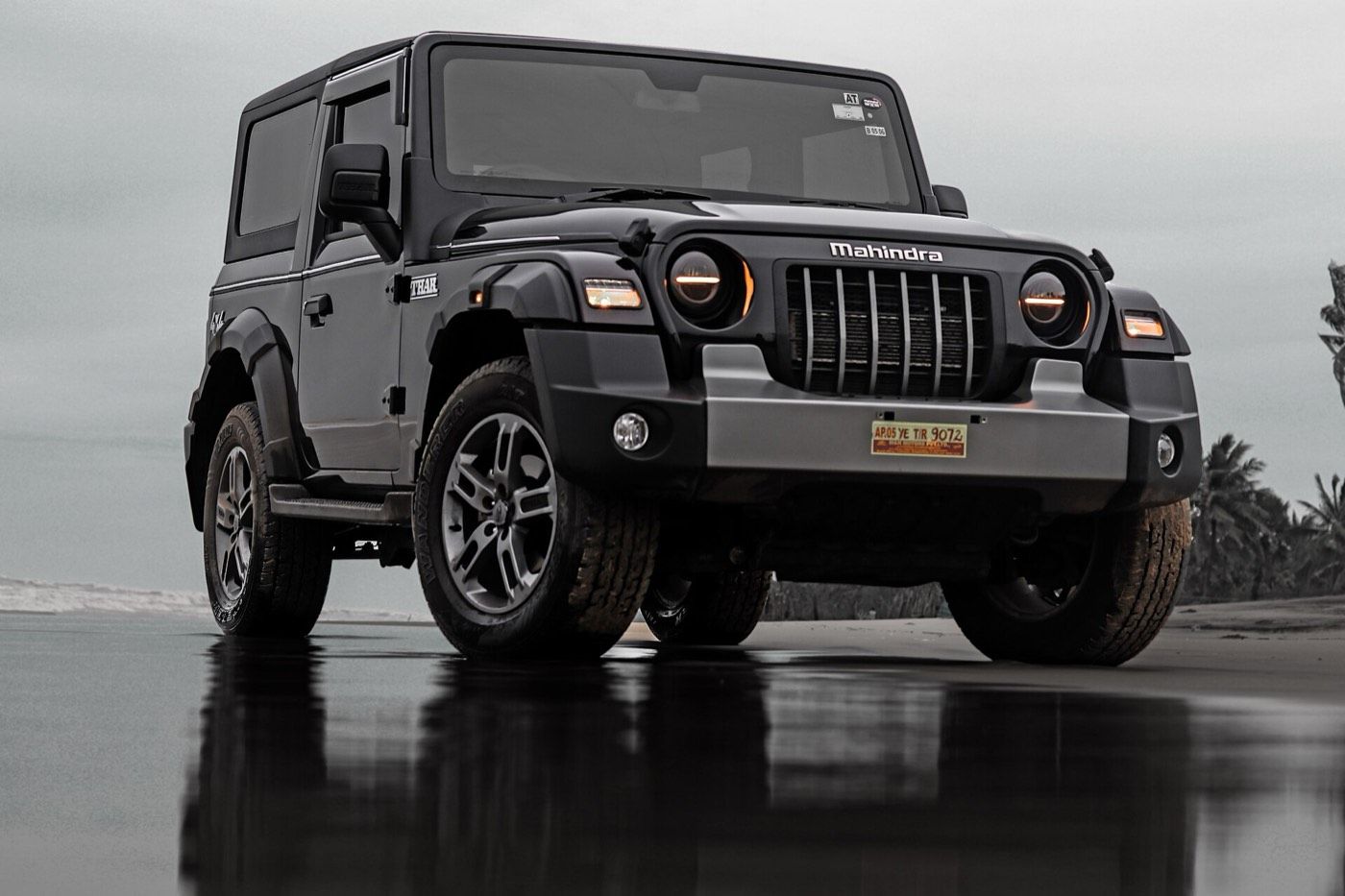
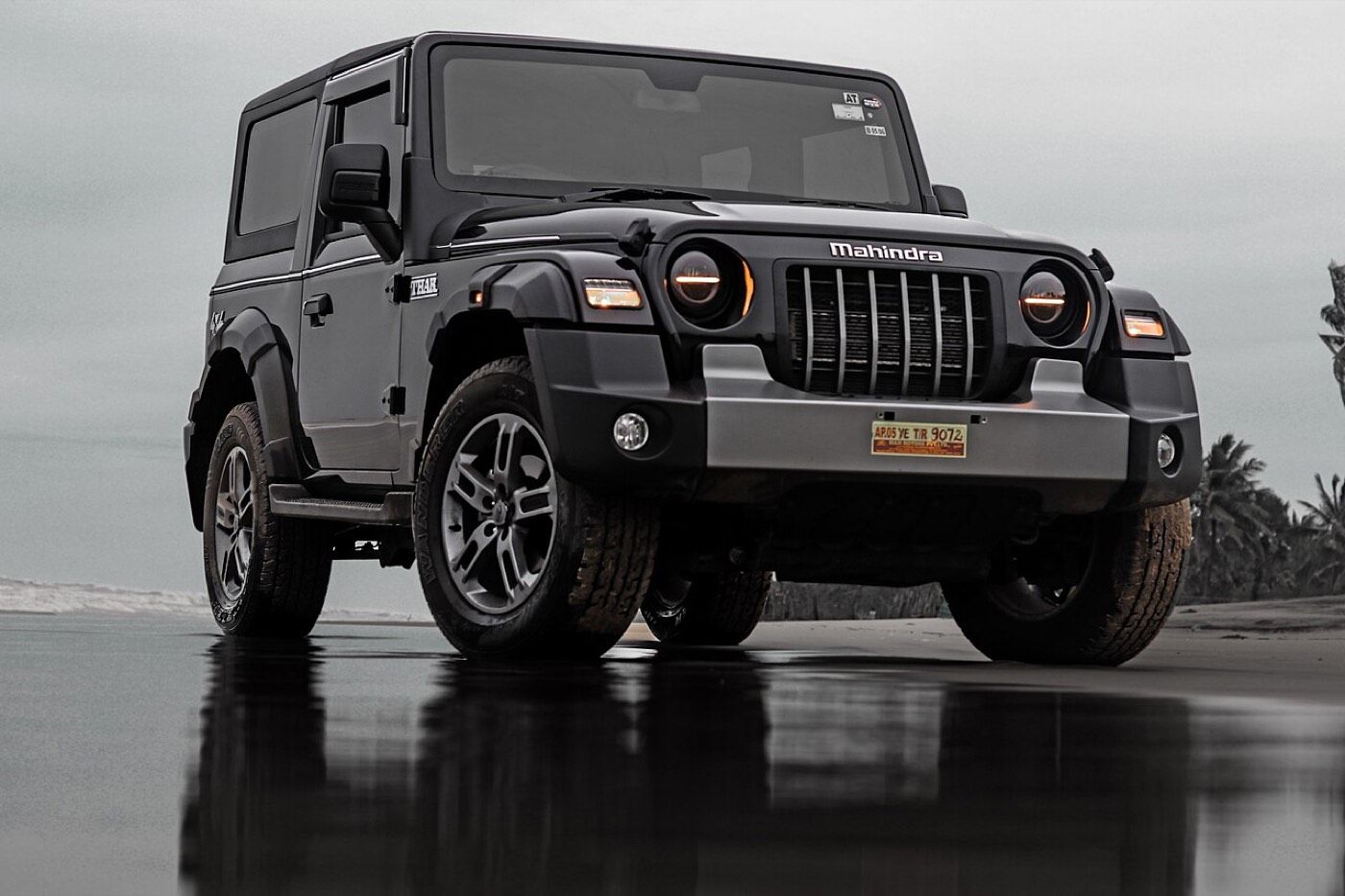
The HT(O) at the ₹16.50 lakh top of this listing carries part-time four-wheel drive with a low range, and everything else follows from it: approach angles you can use, 226 mm of ground clearance that turns a rutted farm track into a scenic route, and axles that keep the wheels planted when the diagonal pair are in the air. The windshield frame sits forward of the tyres so you can see the corner you are climbing into. The side panels come off. The top comes off. None of this is nostalgia for its own sake; it is a tool with a shape, and the shape is the function.
The 2.0-litre diesel — 150 bhp at 3,500 rpm, 320 Nm from 1,500 to 2,500 — is the right engine for the job, and the low-range gearing means the torque number matters more than the power one. In sand and rock crawl, a plateau like that does what a turbo-petrol’s peak cannot: it just pulls, endlessly, without a downshift negotiation. The conventional automatic on the top two diesel trims is torque-converter calm, which is exactly the correct coupling for a vehicle whose throttle inputs on dirt are inherently sloppy.
On road: an art form, not a commute
Driving a Thar in Delhi is a decision you make with your forearms. A recirculating-ball steering box built to survive a rock banner wanders with the specific loose-toothed feel that demands constant small corrections, and how long a driver notices them is a question for a month behind the wheel, not a spec sheet. The body floats on broken expressways in a way that asks for braking 20 metres earlier than a crossover would, and a ladder frame clunks audibly over expansion joints like an old friend clearing its throat. The 2,080 kg kerb weight means the diesel works for its 165 km/h indicated ceiling, and the drum rear brakes have an opinion about hard stops from speed.
The Thar is not a bad on-road car. It is a superb off-road car that agrees to be an on-road compromise, and the entire purchase question is which half of that sentence you actually live.
Around town it settles into itself. The upright seats and forward window frame give a view over traffic that no SUV at this money matches, the high seat makes entry easy for old knees and young children, and the short 2,595 mm wheelbase in its boxy footprint parks better than its width suggests — 1,818 mm is the figure you negotiate in flat columns. The 570-litre boot rides behind the axle line, which is why the rear overhang sticks out in a lift, and why on the published volume it fits a fortnight of camping without folding anything.
Inside: a friendly office, not a lounge
The AXS+ cabin gets the touchscreen, the digital cluster on top trims, leatherette seats and rear vents with their own blower — honest equipment, honestly packaged, with switchgear that looks built to be operated with muddy hands because it will be. Fit and finish are improved beyond the Thar of old folklore, but nothing here matches the screen-first sophistication of the XUV 3XO, which shares a price point and a completely different value system. Wind and tyre noise above 100 km/h are a fact of the removable-top physics. The seats are the upright kind that keep you comfortable on a six-hour day precisely because they will not let you recline into torpor.
The economy ledger
Claimed 14 kmpl; MotoSutra estimates 10-11 for a city month, with an expressway band of 12-13 at a legal, Thar-appropriate pace. The petrol MS and AS variants below ₹11.49 lakh narrow the city deficit slightly and widen the altitude and load deficit. None of this matters to the actual buyer, who has already decided that the weekend is the point — but it should matter to the person being talked into a Thar as a sensible family car by an enthusiast. That person deserves this paragraph.
The safety conversation, held honestly
Three-star Global NCAP, dual airbags, ABS with EBD and stability control: this is the segment’s ceiling for a body-on-frame machine at this money, not a failing unique to Mahindra, and the physics of a tall, rigid vehicle in a pedestrian-heavy city is its own asterisk. The Thar protects its occupants with mass and height better than the star score implies and protects everyone else with neither. Buy the HT(O) for the roll-overs you will never take; do not buy it for a crash-test trophy, because the five-star families on this list have that argument and will win it.
Verdict
Thar ownership is a trade: you accept mediocre road manners, mediocre economy and an average crash score in exchange for capability that has no substitute at the money and a personality no marketing department could price. The AXS+ automatic diesel at ₹14.49 lakh is the road-lifestyle buy; the HT(O) 4WD at ₹16.50 lakh is the vehicle. If the weekend plan involves a track and the weekday plan involves patience, nothing else in this catalogue will make you happier.
Who should buy it
Owners with a second car or a tolerance for the wander; campers, photographers, beach-access people and the simply smitten, who understand they are buying a hobby with number plates. Who should not: one-car households with a pregnancy, an infant seat or an elderly parent in the loop — the safety and access compromises are real — and anyone who learned about it from Instagram rather than from an axle.
Pros and cons
What we like
- Ladder frame, solid axles front and rear, 226 mm of clearance and a low-range transfer case on the HT(O) — hardware nothing at this price touches
- The diesel’s 320 Nm plateau from 1,500 rpm pulls it out of most troubles, on road and off it
- Removable side panels, upright seats and a windshield frame ahead of the tyres: personality as equipment
- The 570-litre boot figure is real luggage volume behind an axle line that never has to fold for a camp kit
What we would change
- On road: wandering steering, body float over broken expressways, and a ladder frame that clunks over every expansion joint
- Three-star Global NCAP score with dual airbags is the segment’s honest ceiling, not its best
- Claimed 14 kmpl softens to an estimated 10-11 in town, and the 2,080 kg kerb weight is in every one of those numbers
- It seats four and pretends otherwise; the fifth position is a rumour
Frequently asked questions
Is the Thar a good daily drive?
Livable, never effortless. The catalogue’s own framing is that it is a hobby that occasionally commutes: the frame clunks over city breaks, the steering wants constant small corrections on highway, and MotoSutra expects the 14 kmpl claim to become 10-11 kmpl in town. It does the school run with dignity and complaints you stop hearing after a fortnight.
Which Thar variant should I buy?
If dirt is in the plan, the HT(O) 4WD diesel automatic at ₹16.50 lakh is the only answer in this listing — part-time four-wheel drive with low range. If the Thar is road poetry, the AXS+ AT at ₹14.49 lakh gives you the 320 Nm torque and the automatic without hardware you will not use, and the petrol AXS at ₹12.99 lakh is the city-conscious entry.
How safe is the Thar?
Honestly: average for its layout. It carries a three-star Global NCAP rating in this listing with dual airbags, ABS with EBD and stability control. Body-on-frame construction buys off-road capability, not crash-star economics, and no one selling you a Thar as a family safety car is doing you a favour.
Can the Thar carry a family?
Four, comfortably — the seats are upright, the rear AC vents have a dedicated blower, and the 570-litre boot behind the axle line swallows a week’s kit. A fifth adult is not a Thar decision; it is a compromise decision.