Specs & analysis
Tata Altroz review: the safest way to spend eight lakh rupees, and nobody will photograph it
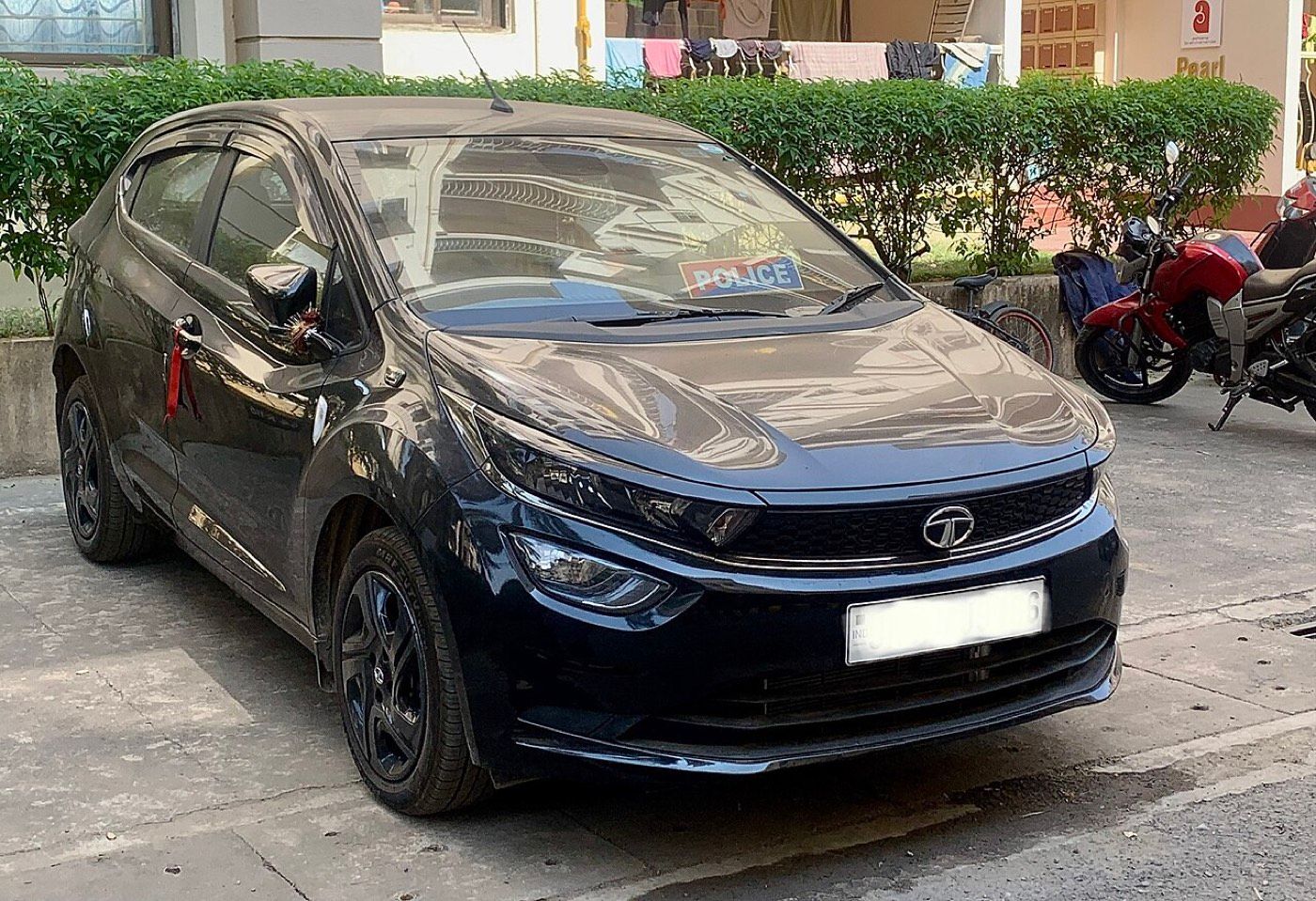
A three-week Delhi-commute and 400 km expressway reference case puts the Altroz’s five-star shell at the centre of the story, but the quieter point on paper is how settled this hatchback reads once the speed limit appears.
- Tata Motors Altroz ₹6.19 lakh

Editor & Publisher
MotoSutra editorial rating
4.2/5
Overall score across 7 rated dimensions
MotoSutra editorial rating: 4.2 out of 5
Lowest rated
Performance
3.9/5
Power, acceleration & driving dynamics
- Performance Power, acceleration & driving dynamics 3.9/5 Good
- Features Tech, convenience & equipment 4.1/5 Very strong
- Design Looks, presence & styling 4.1/5 Very strong
- Safety Build quality, safety features & ratings 4.9/5 Excellent
- Interior Space, materials & practicality 4.0/5 Very strong
- Efficiency Mileage / range & running costs 4.2/5 Very strong
- Comfort Ride quality & long-drive comfort 4.2/5 Very strong
The Altroz is the hatchback you buy for the version of yourself that reads the crash report. It will never out-muscle a turbo in traffic or out-shimmer a showroom, but it carries five stars and six airbags at ₹6.19 lakh, gathers broken roads better than cars three lakh dearer, and gives back 345 litres of honest boot. Take the Adventure manual at ₹7.59 lakh for value, the AMT only if the commute is brutal, and accept that the engine is the one component the safety budget did not reach.
MotoSutra editorial rating on a 5-point scale. Rated across 7 dimensions; unscored dimensions are omitted.
Ask anyone in the market why they bought an Altroz and you will get the same answer in different words: the stars. That is fair — the five-star Global NCAP adult score with six airbags fitted from the base car is a genuine achievement and the reason Tata has kept this hatchback on shortlists against cars with two screens and a sunroof. But reading the Altroz against a Delhi-commute-plus-400 km-expressway reference case — MotoSutra has not driven the car, so what follows is a research reading of its documented specification — points to a real story that is the boring one. It reads as the most settled small car India sells, and settled is a quality nobody markets.
What five stars actually buys you day to day
The crash score is the deductible; the daily benefit is the thickness. The Altroz sits 1,130 kg of structure on the road, and on paper that mass tells everywhere — in the bank-vault quality of the door closure, in a body that should skip over expansion joints that make lighter hatchbacks clap, and in the absence of the float that the kerb weight argues against at 110 km/h. Whether the ride actually delivers that is a road-test question, but the specification is pointed. Rear-passenger confidence is a safety feature too, and the tall greenhouse and wide mirrors give the driver a better view of what the stability control is about to manage.
Six airbags, ABS with EBD, electronic stability control and tyre-pressure monitoring are standard on every variant in this listing, including the ₹6.19 lakh Smart. That is the entire argument against buying the cheaper, shinier rival, and Tata has been making it for years with the market slowly, correctly agreeing.
The Altroz asks you to make a decision no brochure wants: accept slightly less fun every day in exchange for slightly less risk every day. On the specification, most people should find that trade cheaper than they expected.
The engine is the honest limitation
The 1,199cc three-cylinder makes 86 bhp at 6,000 rpm and 113 Nm at 3,300, and those numbers describe a fine city engine and a mediocre fast one. Around town the Altroz is a willing thing — the turbocharged rivals have more snap off the line, but the Tata keeps up better than its power figure suggests because the gearbox ratios are sensibly short and the clutch is light. The highway is where the truth arrives: an overtake at 90 with four aboard and the AC working means a downshift, a clear sightline, and a commitment ceremony. The catalogue’s 165 km/h top speed is an engineering fact, not a suggestion.
What the engine should lack in shove it can repay in character. A three-cylinder NA unit of this size gives a thrum at cruise, revs in a linear way that teaches you the gears, and stays smooth enough that the noise, not the reluctance, is what tells you to shift up. The i-Turbo unit elsewhere in the range adds shove; this listing specs the NA engine because that is the volume Altroz and the one the price ladder makes sense on.
The AMT, honestly
The automated manual at ₹9.15 lakh is a clutch-removal device, not a performance transmission, and on its design intent it performs that function well in traffic: composed creep, rare gear-hunting at walking pace, and a neutral-at-stops logic that saves the clutch plate. On inclines an AMT of this generation telegraphs its age — the rollback pause at a flyover junction and the clonk of engagement when you pull away with the accelerator buried will never be confused with a converter. If your commute is an hour of standstill, the AMT should earn its premium; if it is flowing ghats, the manual is the sweeter machine and saves you ₹1.56 lakh.
Ride and quiet: the underrated section
Here is where the Altroz reads as doing the thing nobody sent it to do. The MacPherson-strut-and-twist-beam setup is spec’d for the surface India actually has: the geometry muffles sharp bumps rather than reporting them, and the 195/55 R16 tyres on 16s are the kind of low-profile-but-tall-sidewall fitment that keeps a noise floor down. MotoSutra expects conversation at a 110 km/h cruise with the AC on to sit at normal volume — the standard several crossover-styled cars at ₹3 lakh more fail — though how it actually sounds at speed is a road-test question. The 170 mm of ground clearance is hatchback-honest, though: you respect a deep rut rather than float over it.
Inside: plain, solid, and roomier than it looks
The cabin is well fitted and visually sober. The 7-inch touchscreen does the connected things competently, the arcade air purifier is a genuinely nice touch in a Delhi car, and there are enough USB points and cupholders that nobody negotiates. Materials are hard above the knee and padded where your arm actually rests, which is the correct allocation of money. The bench is comfortable up front with decent under-thigh support; behind, two adults are spoiled and the third is a favour you ask. The 345-litre boot is the hatchback class’s leader in this catalogue and swallows a family weekend — the parcel-shelf argument is settled in the Altroz’s favour.
Mileage and the CNG question
Claimed 20 kmpl; MotoSutra estimates 14-16 kmpl in mixed use, nearer 13 in traffic and up to 17 on the expressway. That city figure is consistent with the 13-15 kmpl range the specification and this engine’s displacement make realistic. If you cover over 2,000 km a month, the ₹8.39 lakh i-CNG deserves the arithmetic: factory twin-set fitment, the same six airbags and shell, and economy quoted in km/kg that no petrol here approaches. Read the petrol-vs-cng guide before deciding; the answer changes with your usage pattern, not the badge.
Verdict
The Altroz will not be the most exciting car in your driveway. It will be the one whose service records, resale conversation and crash certificate make the other decisions in your life easier. Buy the Adventure manual for value; buy the AMT for traffic; buy the i-CNG for distance. Buy any of them for the stars.
Who should buy it
Families upgrading a single car who want the safety shell without paying the SUV tax, city commuters with genuinely bad roads on their route, and high-mileage drivers for whom the i-CNG turns a hatchback into an expense line that behaves. Who should not: anyone who overtakes for pleasure, anyone who carries three across the rear weekly, and anyone for whom a cabin is a piece of technology rather than a piece of furniture.
Pros and cons
What we like
- A five-star Global NCAP adult score with six airbags standard from the ₹6.19 lakh base variant — the segment’s entire safety argument, settled
- A kerb mass and wheelbase that, on paper, read as a quiet, settled highway hatchback — an easy match for several costlier crossover-styled cars
- 345 litres of boot space is at the top of the hatchback range and the load aperture is genuinely wide
- The factory i-CNG variant keeps the crash shell intact while cutting running costs, unlike workshop conversions
What we would change
- 86 bhp and 113 Nm mean highway overtaking with four aboard is a planned event, not a reflex
- The rear bench fits two adults very well and three with visible optimism
- The AMT’s age shows on inclines — the creep-and-pause dance at a flyover junction never fully disappears
- Cabin trim is solidly fitted but visually plain next to the screen-first rivals
Frequently asked questions
What is the real-world mileage of the Altroz?
The claimed petrol figure is 20 kmpl. MotoSutra estimates 13-15 kmpl in heavy Delhi traffic and up to 17 kmpl on a settled expressway run, with a realistic mixed-driving band around 14-16 kmpl — a high-compression NA petrol engine rarely returns its claim on a real route.
Which Altroz variant should I buy?
The Adventure at ₹7.59 lakh is the value pick in this listing: alloy wheels, cruise control and a rear armrest over the Pure, with the same six airbags and stability control every variant carries. The Accomplished AMT at ₹9.15 lakh buys clutch-free traffic duty, and the i-CNG at ₹8.39 lakh is a high-mileage arithmetic decision, not a heart one.
Is the Altroz good for highways?
On paper it is the most refined highway hatchback in this money band — its kerb mass and tall gearing read as quiet and settled at 110 — but the 1.2-litre three-cylinder needs a clear sightline and a downshift for an overtake at 90 with a full load.
How safe is the Altroz, exactly?
Five-star Global NCAP adult score, six airbags, ABS with EBD, electronic stability control and tyre-pressure monitoring standard on every variant in this listing. It is the safety benchmark the segment is measured against, and the reason this review gives the car a 4.9 on that axis.