News
Tata Aeris launched: the 2026 Tigor facelift arrives with new lights, dual-cylinder CNG and a ₹5.29 lakh entry price
Tata has launched the Aeris, the 2026 facelift of its Tigor sedan, with a new front light signature, a cabin carried over from the recently updated Tiago and a CNG layout that runs two cylinders to protect the boot. Announced prices run from ₹5.29 lakh to ₹9.74 lakh, ex-showroom.

Editor & Publisher
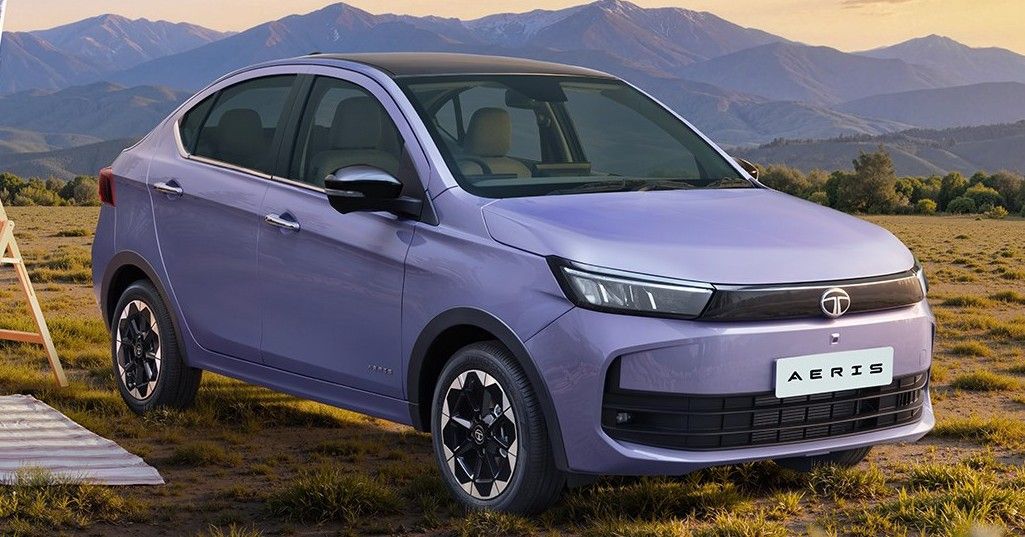
Tata has launched the Aeris, a compact sedan that is the 2026 facelift of the Tigor, at announced prices of ₹5.29 lakh to ₹9.74 lakh, ex-showroom. The name is new; the car underneath it is not. The side profile stays largely familiar, and the notchback roofline that has always been the Tigor’s most useful design decision carries straight over.
What has changed is the front and rear treatment, the wheel design and the cabin. The Aeris runs new LED headlights with slim daytime running light strips above them, a blanked-off panel where an upper grille used to sit, a front camera, a redesigned bumper and new LED fog lamps. At the back there are LED tail lights joined by thin LED units, a new bumper and a separate reversing light.
The mechanical package is continuity. Under the bonnet is Tata’s 1.2-litre three-cylinder petrol engine, quoted at 86 hp in the launch announcement, with a CNG option rated at 76 hp and a dual-cylinder layout that Tata has aimed at protecting the boot. Both fuels can be ordered with a 5-speed manual or a 5-speed automated manual. The cabin is largely taken from the Tiago hatchback, which recently received a major update.
Tata Aeris: What’s New?
The front end is where the change is most obvious. New LED headlights sit below thin DRL strips, and the section that previously read as a grille is now a blanked-off panel — a styling decision rather than a cooling one, on an engine that has not changed. A front camera is mounted up there, and the bumper below is new, carrying new LED fog lamps.
The wheels are 15 inches, as before, in a new design. Around the side there is nothing to report: the silhouette, the greenhouse and the notchback rear roofline all carry over, which keeps the boot separate from the cabin in the way a small sedan with a hatchback’s rear end does not always manage.

At the rear, the tail lamps are LED units nearly connected by a thin LED strip across the bootlid, with a revised bumper and a reversing light mounted separately.
Tata Aeris Engine and Transmission
The Aeris uses Tata’s 1.2-litre, three-cylinder petrol engine. The launch announcement puts its output at 86 hp. The CNG version is quoted at 76 hp, and the CNG kit is offered against the same engine rather than a separate one.
Both are available with either a 5-speed manual or a 5-speed AMT, and the announcement describes the two gearboxes as offered across both fuels. No torque figure, acceleration time or fuel-economy certificate is part of this announcement, so none is recorded here.
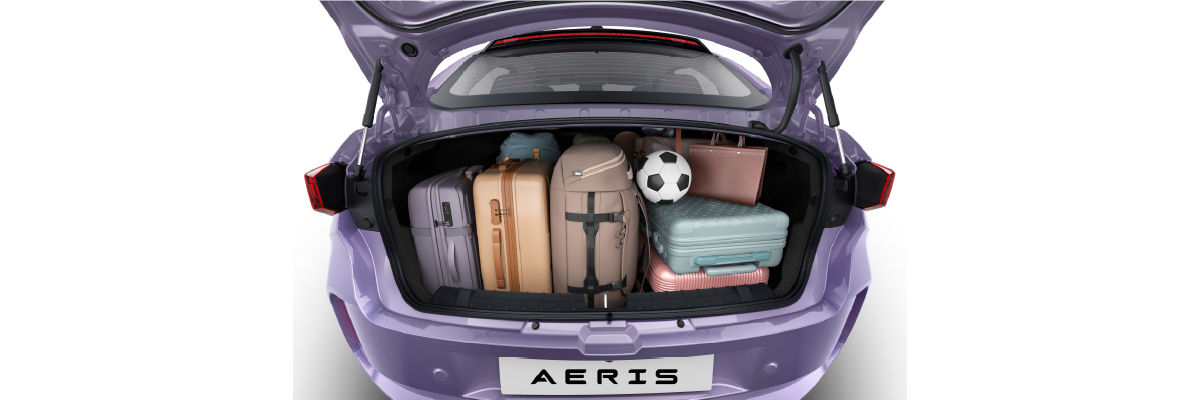
Tata Aeris CNG and Boot Space
The CNG version runs two cylinders rather than one. The point of the extra tank is practical rather than range-related: a single larger cylinder in a notchback boot consumes most of the space, while two smaller ones can be packaged to leave more of it behind.
Tata’s claimed boot capacity of 419 litres is quoted for the petrol car, which does not carry the cylinders at all. A corresponding figure for the CNG variant has not been announced, and the two should not be read as the same number.
Tata Aeris Interior and Features
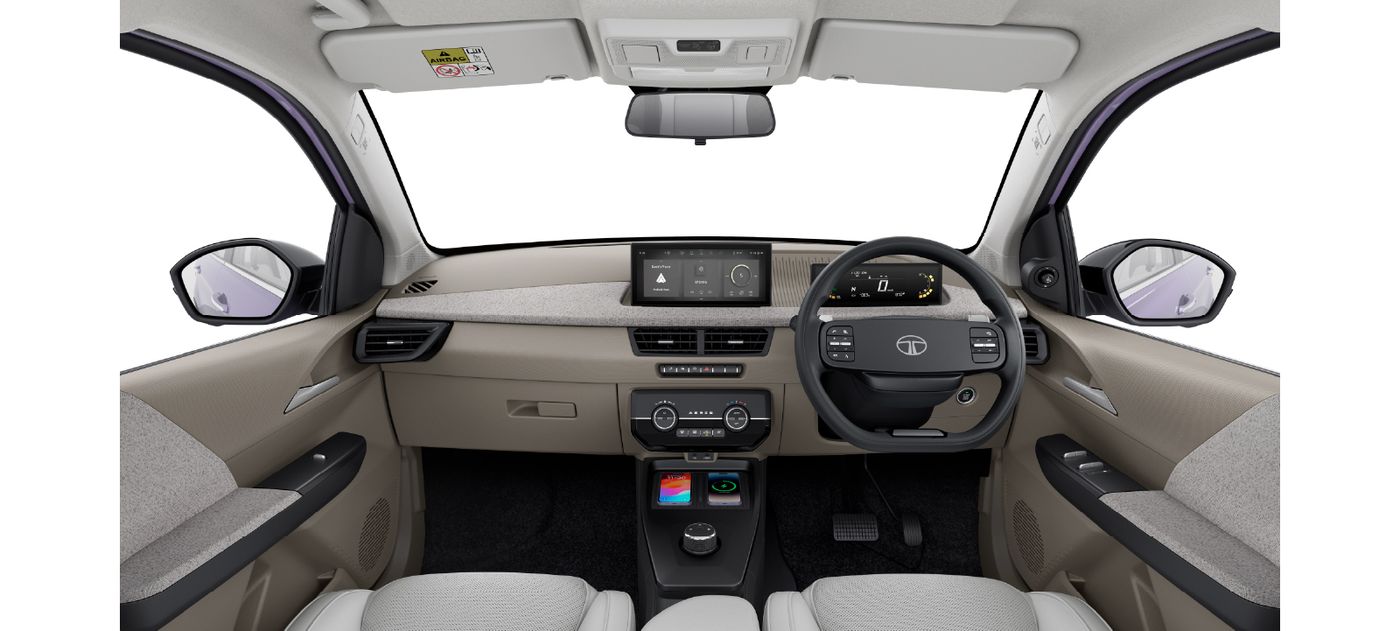
Much of the dashboard has been borrowed from the Tiago, which is a useful shortcut for Tata because that car was updated recently and its interior hardware is current. The Aeris gets a 10.25-inch touchscreen and a 5-inch digital driver’s display, both floating units rather than recessed into the facia.
Two decisions in the detail are worth noting. The steering wheel moves to a matte finish and the Tata logo on it is not illuminated. And Tata has resisted replacing physical switchgear with haptic or touch controls, which in a car bought largely for everyday use is the more practical choice.
The equipment list announced at launch includes wireless charging, ventilated front seats, leather upholstery, and a fabric finish across the dashboard that extends to the door cards.
Tata Aeris Rear Seat Space
The launch walk-around placed a presenter in the rear seats to show headroom and legroom rather than to measure them, and no space figures have been published, so the rear bench should be treated as unquantified for now.
The rear equipment is stated plainly: powered windows, air-conditioning vents, a 65-watt Type-C charging port and a central armrest with cupholders.
Tata Aeris Price
Announced prices run from ₹5.29 lakh to ₹9.74 lakh, ex-showroom. Variant-wise pricing and trim names are not part of this announcement, so the range is the only figure recorded here and no individual variant is credited with a price.
Tata Aeris Rivals
The launch coverage positioned the Aeris against the Maruti Suzuki Dzire, the Hyundai Aura and the Honda Amaze. Those are the comparisons made at launch; this article does not rank the four or judge the Aeris against any of them, because none of that has been measured.
Tata Aeris: Key Specifications
| Specification | Tata Aeris |
|---|---|
| Body type | Compact sedan |
| Engine | 1.2-litre, 3-cylinder petrol |
| Fuel options | Petrol, CNG |
| Petrol power | 86 hp |
| CNG power | 76 hp |
| Transmission | 5-speed manual, 5-speed AMT |
| Wheel size | 15-inch |
| Petrol boot capacity | 419 litres (Tata claim) |
| CNG setup | Dual-cylinder |
Dimensions, kerb weight, ground clearance, mileage and safety equipment are not part of this announcement and are left out rather than filled in from another source.
Tata Aeris vs Tigor: What’s Changed?
| Area | Previous Tigor | New Tata Aeris |
|---|---|---|
| Positioning | Tigor sedan | 2026 facelift, sold as the Aeris |
| Headlights | Previous design | New LED units |
| DRLs | Previous design | Slim LED strips |
| Front bumper | Previous design | Redesigned, with a blanked-off upper section and front camera |
| Fog lamps | Previous design | LED fog lamps |
| Wheels | Previous design | New alloy design, 15-inch retained |
| Rear lighting | Previous design | LED tail lights with a connecting LED strip, new bumper |
| Interior | Previous cabin | Updated Tiago-derived dashboard, 10.25-inch touchscreen, 5-inch driver’s display |
The engine, the gearbox options, the wheel size and the side profile are unchanged. Every row above describes a change the launch announcement itself makes; where the car carries over, it is recorded as carrying over.
Frequently asked questions
What is the Tata Aeris?
The Aeris is the 2026 facelift of Tata’s Tigor sedan, sold under a new nameplate. The side profile and the notchback roofline carry over from the car it updates, while the front and rear lighting, the bumpers and the alloy wheel design are new.
What engine does the Tata Aeris get?
A 1.2-litre three-cylinder petrol engine, which can also be had with a CNG kit. The launch announcement quotes 86 hp on petrol and 76 hp on CNG. No torque figure is part of this announcement.
What gearboxes are available?
A 5-speed manual and a 5-speed automated manual, and the announcement describes both as available across the petrol and CNG options.
Does the Tata Aeris get CNG?
Yes. The CNG version uses a dual-cylinder layout that Tata has set up to give back as much boot space as possible. The 419-litre boot figure quoted at launch is the petrol car’s, so a CNG boot capacity has not been stated.
What is inside the Tata Aeris?
Much of the cabin is taken from the Tiago hatchback, which recently received a major update. The launch specification lists a 10.25-inch touchscreen and a 5-inch digital driver’s display as floating units, wireless charging, ventilated front seats, leather upholstery, rear air-conditioning vents, a 65-watt Type-C charging port and a central armrest with cupholders. Physical switchgear is retained rather than replaced by touch controls.
What does the Tata Aeris cost?
Between ₹5.29 lakh and ₹9.74 lakh, ex-showroom, as announced. Variant-wise pricing is not part of this announcement, so the range is the only figure recorded here.