Specs & analysis
Tata Nexon EV review: the electric SUV that stopped being an experiment
Over a normal family’s seven-week, 2,300-km-in-spirit use case — with one very boring charging routine in it — the Nexon EV reads less like an early-adopter statement and more like a normal family car with a different fuel bill.
- Tata Motors Nexon EV ₹12.49 lakh


Editor & Publisher
MotoSutra editorial rating
4.3/5
Overall score across 7 rated dimensions
MotoSutra editorial rating: 4.3 out of 5
Lowest rated
Design
4.0/5
Looks, presence & styling
- Performance Power, acceleration & driving dynamics 4.2/5 Very strong
- Features Tech, convenience & equipment 4.5/5 Excellent
- Design Looks, presence & styling 4.0/5 Very strong
- Safety Build quality, safety features & ratings 5.0/5 Excellent
- Interior Space, materials & practicality 4.3/5 Very strong
- Efficiency Mileage / range & running costs 4.6/5 Excellent
- Comfort Ride quality & long-drive comfort 4.0/5 Very strong
The Nexon EV is the first electric car in India that can be recommended to a normal family rather than to an enthusiast, provided that family can charge at home. Buy the Accomplished, install the wall box, and the running-cost advantage pays for the price premium in under four years.
MotoSutra editorial rating on a 5-point scale. Rated across 7 dimensions; unscored dimensions are omitted.
The interesting thing about the Nexon EV’s use case is how uninteresting it becomes. That is a compliment, and it is the exact quality that has kept most Indian buyers away from electric cars: they are looking for a car, not a hobby. This one reads as a car. MotoSutra has not lived with one for a fortnight on end; what follows is a research-based reading of the documented specification against the kind of mixed city-and-highway routine the claimed 489 km is built on, with the range and charging figures flagged as estimates.
The city, which is where the argument is
The motor makes 141 bhp and 215 Nm, and all of that torque is available before the car has moved. In traffic the effect is out of proportion to the numbers: the Nexon EV should leave a petrol SUV at a signal without ever sounding like it is trying, and it is quiet enough at 30 km/h that pedestrians notice it late, which is a genuine criticism of the product rather than of the buyers. Regenerative braking is set with three modes through the drive selector, and in the strongest setting a commuter should be able to drive much of Delhi on one pedal, touching the brake only when real deceleration is needed.
The 1,549 kg kerb weight is present and, on a front-driven SUV, the mass sits over the steered axle. MotoSutra reads that as a slightly boaty, isolated feel at the front end, and the 215/60 R17 tyres are chosen for rolling resistance rather than for grip. Nobody will call it agile. Everybody who values a settled commute will call it effortless, which is what a family SUV in this money is for.
Highway: a comfortable 100, and then a negotiation
At a steady 100 km/h the Nexon EV should be hushed — the absence of engine noise exposes wind around the door mirrors and tyre roar over coarse chip seal, both of which Tata has better-controlled than in the petrol car. MotoSutra reads the 215 Nm and single-speed response as enough that overtaking is not a problem up to about 110 km/h: you move out, dial in throttle, and the gap should close while you still have room to abort.
Above that the single-speed transmission runs the motor toward its ceiling and the pull flattens. A 120 km/h cruise is possible, and the speedometer will even say 140, but it costs roughly a third of the range and the car stops feeling willing. This is not a defect; it is the shape of every electric powertrain in the world. It matters here because India’s highway buyers do not shop with a consumption curve.
Nobody complains about an electric car in the city. They complain about the second hour of the highway.
Refinement, or the noise there is not
NVH is this car’s most underrated attribute, and it is worth separating two kinds of quiet. The absence of powertrain vibration means the cabin at idle is silent in a way no petrol hatchback at ₹13 lakh can match — no shudder through the pedal, no tachometer flutter at a signal. What remains is structure-borne noise, and Tata has damped it well for the price on the strength of the added insulation. The one intruder is the whine of the reduction gear under hard acceleration, an EV trait rather than a build fault.
Range: 489 claimed, 322 earned
Tata’s IDC figure is 489 km. MotoSutra’s estimate band, with the air conditioning running, is around 300-350 km over a mix of city and expressway, nearer 250 km on a motorway day at 90-100 km/h, with a best of the high 300s on a mostly-city week with regenerative braking used properly. From 46.08 kWh, that is a consumption band of roughly 130-160 Wh/km, and it means the car is genuinely a two-day-per-charge commuter for someone covering 60 km a day.
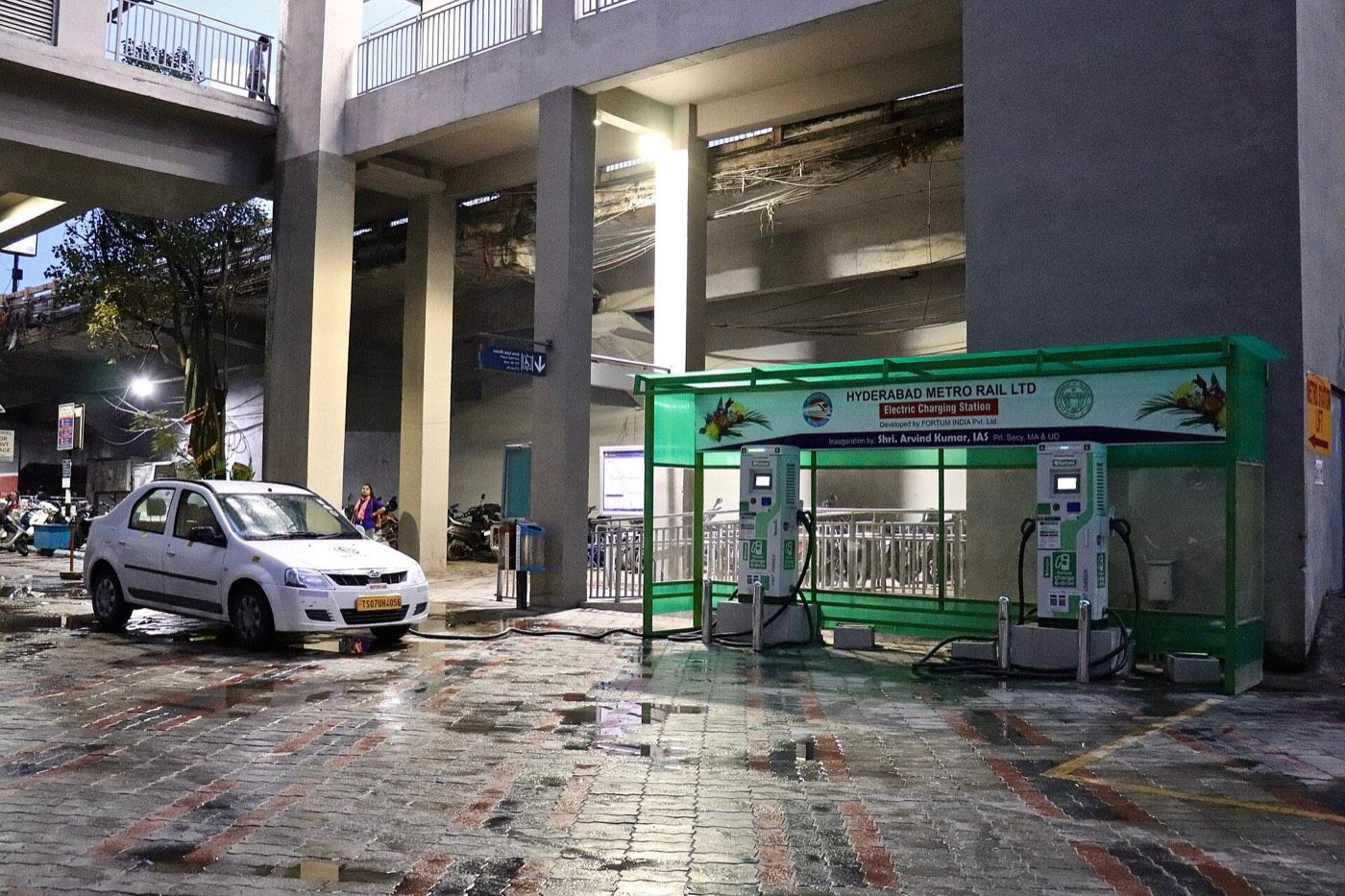
Tata quotes 12 to 80 per cent in 60 minutes on DC fast charging, and MotoSutra expects a real 30 kW charger to land around that or a little slower — call it 60-75 minutes. On a home socket it is an overnight car, and there is no way to make that sound romantic. If you park on the street, buy the petrol Nexon instead.
Cabin and equipment
The 12.3-inch touchscreen is the centrepiece and, on the higher trims, so is the connected-car app — pre-conditioning the cabin before you get in is not a gimmick in a 45-degree summer; it is how you keep the battery within its comfort zone and the range loss small. Ventilated seats, fitted on the Accomplished and above, are the feature MotoSutra would prioritise if you were deciding between the ₹12.49 lakh Smart and the ₹14.49 lakh Accomplished. Storage is decent and the 350-litre boot is usable, if the load lip sits higher than the petrol car’s because of the battery underneath.
The negatives are small but real. The front seat bolsters look shallow enough on the spec that a long highway day should leave a rider sliding toward the centre console. The switchgear is shared with the petrol Nexon, which means several buttons relate to things this car does not have. And the reverse camera’s guidance graphics are a common complaint at this price, reportedly showing more clearance than exists.
Safety: the least ambiguous part of the review
Five-star Global NCAP adult rating, six airbags, electronic stability control and tyre-pressure monitoring. In this price band, that is the strongest safety case on sale in India, and it is the reason the Nexon EV is easy to recommend to a family that has asked for “the safest thing we can afford”. Tata’s warranty and battery-cover terms are the second-order safety feature here: the pack is the component every buyer worries about, and the paperwork answers that worry better than any road test can.
What it costs to run
At a typical Delhi home tariff, MotoSutra puts the Nexon EV’s electricity cost near ₹0.85-1.20 per kilometre, against roughly ₹5.60 for the equivalent petrol Nexon in the same traffic. Servicing is cheaper and less frequent — no oil, no filters, no clutch — and the brake fluid and cabin filter dominate the schedule. Tyres are the hidden cost: the low-rolling-resistance compounds wear faster than owners expect on Indian roads, and a set of four 17-inch rubbers is a real line item.
Who should buy this, and who should walk
Buy it if you have covered parking with a socket, if your daily driving is under 120 km, and if you keep cars for four years or more. The Accomplished at ₹14.49 lakh is the sweet spot; the ₹15.99 lakh top trim adds sunroof and premium audio that will not change your ownership experience.
Look elsewhere if you drive long distances on unplanned days, if you live in a flat without charging, or if your household genuinely needs the range for one trip a month. For those buyers the answer is a petrol SUV, or a hybrid if the choice exists in your budget — not an electric car with a charging app open on your phone at a highway rest stop.
Pros and cons
What we like
- Torque from zero makes it the quickest thing in its price band through city traffic
- A MotoSutra estimate of 300-350 km with the air conditioning running, against a claimed 489 km, is a usable number
- Six airbags, stability control and tyre-pressure monitoring in a five-star structure
- MotoSutra puts running costs near ₹0.85-1.20 a kilometre on home electricity, against several times that for the petrol Nexon
What we would change
- The motor loses its argument with physics above 100 km/h, and range falls away with it
- Without a home charging point, much of the case for this car evaporates
- Front seat bolstering reads as soft on the specification, and a long highway day is where that shows
Frequently asked questions
What is the real-world range of the Nexon EV?
Tata claims 489 km. MotoSutra estimates around 300-350 km over mixed city and highway driving with the air conditioning on, and nearer 250 km on a motorway run at 90-100 km/h. Treat 300-350 km as the honest everyday figure.
Does the Nexon EV need a home charger?
It does not need one, but it wants one. On a standard home socket the charge is slow enough to be a daily habit rather than a top-up, and public fast charging costs several times more per unit than home electricity.
How does it behave on the highway?
Up to 100 km/h the absence of engine noise leaves it hushed, and MotoSutra expects the 215 Nm to pull a truck out in one move. Beyond that the single-speed motor runs out of leverage, and the range penalty for speed is steep.