Road test
Mahindra Thar 2020 review: the new generation, driven where it belongs
The all-new 2020 Thar, road-tested on slush, rock and water rather than on a photo shoot schedule. What the new ladder-frame chassis changed, how the 2.2-litre diesel and the 2.0-litre petrol automatic behave, and where the LX and AX trims differ.

Editor & Publisher
This is MotoSutra’s own road test of the all-new 2020 Thar, written and published by Rahul Singh in August 2020 and reproduced from an archived copy of the original page. It predates our current testing method, our current pricing treatment and our current rating system, so it carries no MotoSutra score. Everything below — including the mileage and dimension figures — is what the 2020 article reported, and none of it has been re-measured since.
Mahindra Thar 2020 — all-new generation overview
I’m excited about the car I’m going to test drive today, and I had to drive out and bring it into its natural habitat. This is an iconic car. It is all about freedom and all about lifestyle. Seldom do you find a car that becomes an icon, and the Mahindra Thar is exactly that.
Launched 10 years ago in a very bare-bones form, without creature comforts like air conditioning, the first-generation Thar evolved from the romance that was the open GA classic design. It was packed with the latest and best diesel powertrain technology of its time. Good old-fashioned four-wheel drive and, of course, a soft-top. Tested on some of the roughest off-road courses across the country, it wowed many before it even hit the showroom floor.
In time the Thar evolved into something more useful, and for many it was a childhood dream. Reimagined, boy did it excite a whole new audience of off-roaders — and lifestyle buyers, for whom the Thar was the perfect second or third vehicle.
2020 Mahindra Thar exterior
This time around it is quite different, because Mahindra is looking to take the Thar mainstream. They have made a car that will appeal to all kinds of people, not only ones who want to go outdoors.
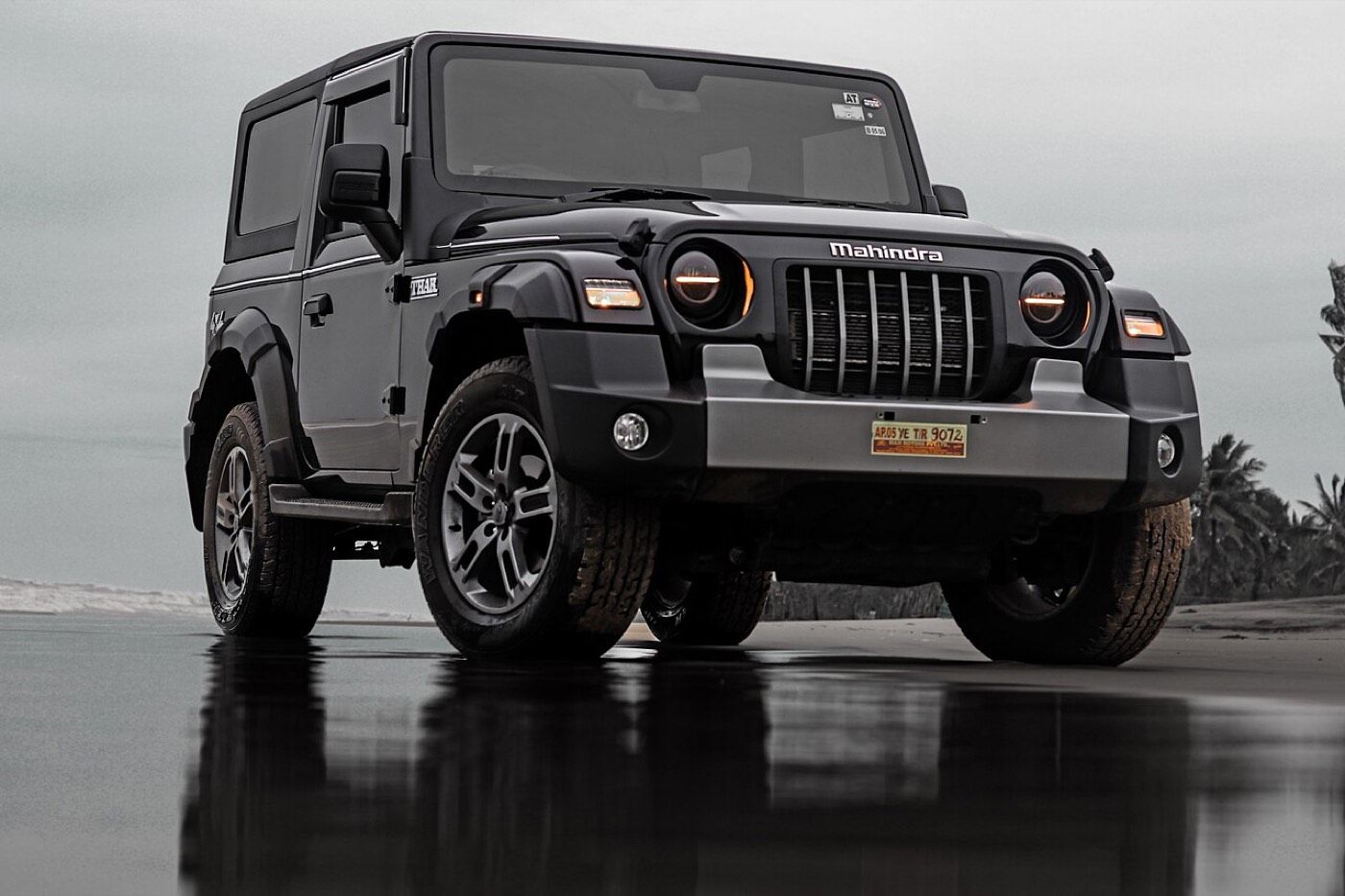
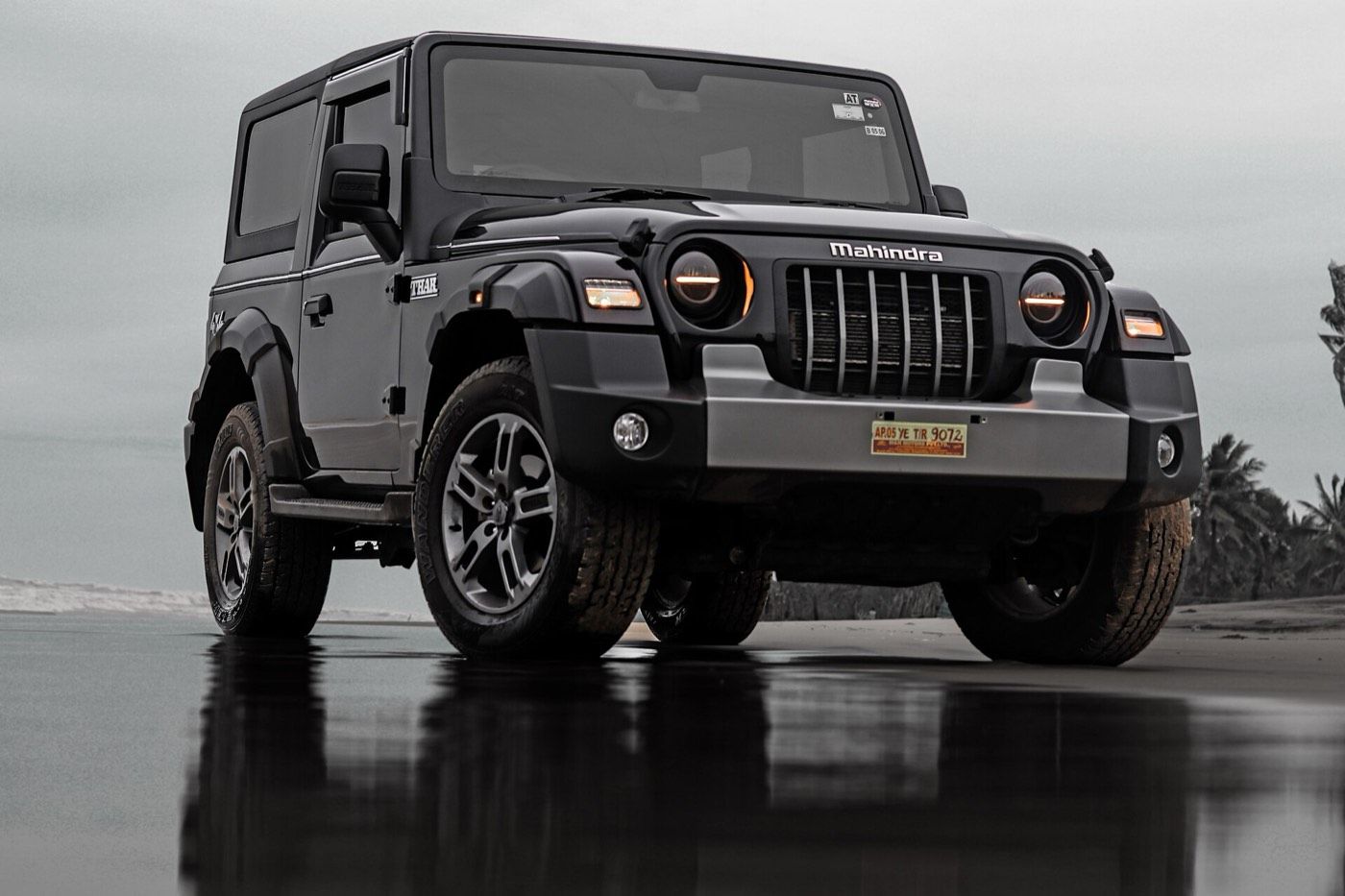
Let’s take a look around the car before we dive into the details. There is no denying that when you first look at this car, it does bear a resemblance to the Jeep Wrangler. They have tried to make it quite different, though, with a lot of changes. The front grille now has horizontal slats. The bonnet slopes down. You have round headlamps, and for the first time the Thar gets DRLs. Up front there is a large, chunky bumper that tells you this is tough — this is butch, it is an SUV. The front wheel arches curve down to the front where the fog lamps rest.
You have got those bonnet ties again, which also bear resemblance. Then there is this wheel arch, which is tough — quite wide, extending beyond the width of the car and giving the front a lot of width, and that arch extends down the side. The Thar rides on an 18-inch wheel with a 255/65 tyre, so a good amount of rubber there, which will help the ride. Black cladding runs into the floorboard, and around the rear there is contouring around the windows: squarish windows front and rear under the window line, a leaned-back A-pillar, and it squares down to the rear as well.
Interesting details on the side — the mHawk logo, the antenna, the Thar name emblazoned into the rear-view mirror. And of course this is an SUV, so we have to talk about the ground clearance, which is 226mm, and they say the water-wading capacity is 650mm. So you can go through anything.
On this one you also see the external hinges on the doors. A lot of these details tell you this is an outdoorsy vehicle. Around the back there is the massive tail-mounted spare wheel. It is very square — the top of it is like a right angle, with no tumblehome in the roofline that we are used to seeing on cars. The tail lamps have a hexagonal shape. One feature they have been talking about on this car, and this is the first time I have seen it in the metal, is the very short overhang at the rear. You can notice it from the side, and it means a good departure angle — something necessary for a tough SUV like this.
The tailgate opens in two parts: the bottom half drops down to give access to the boot, and the window opens upwards as well. The seats split and fold for more luggage space. It is a bit of a step up into the load area.
2020 Mahindra Thar interior
Inside, there is no real grab handle on the driver’s side, but there is one on the passenger side, and the other grab handle sits on the dashboard. On the whole it is more modern and far better than before, and the materials used are much richer.
There is a carbon-fibre-style texture sitting between the two AC vents. Plastic, matte and chrome finishes, and the upholstery too — overall a lot richer. The vents are circular, and the movement on them is a bit flimsy and doesn’t direct the air up or down well, but that is small nitpicking on my part. The dials are a little basic and stand out against the rest.
Otherwise it is a nicer-looking interior. You do have steering-mounted controls, as well as plenty of storage:
- a space for the phone
- cup holders
- door pocket spaces
- nice toggle-style switches
And of course the AC controls in the middle of the dash. On the feature front you have USB ports and a 12V charging socket up front. There are also some interesting details, like the silver badging — something customers wanted, to feel like they got a piece of history. Then you have the four-wheel-drive transfer lever, which is very easy to access, and the main gear lever, which is a little longer than it needed to be. On the whole, though, a nice-looking interior and much, much better than before.
It looks like a reasonable amount of space in the rear seat, so let’s get in there and see. As I get out, I notice there is a star logo on the door. While stepping out I have to point out — you can look down — that the floor is a washable material, but it tends to be a little slippery when wet while you are getting in and out. Seating capacity is 4 or 6 depending on variant.
To get into the rear you move the front seat full forward and flip it. It is a bit of a tight squeeze in. Once inside, you pull the seatback up. Accessing the second row from the driver’s side, the passenger seat does flip forward a little further, so access is better from that side — but it is still tight. There is a fair amount of room, with the front seat pushed all the way back. I’m 5’10”, so a good amount of room over here, and a taller person still gets decent legroom. You can stretch your feet out, but the rear wheel well intrudes, so the base comes up into the leg area. The wheel arch also intrudes into the seating area, so where there could have been space for three, it is now good for two at the back.
There is a good amount of headroom, you can see the exposed roll bar — this is the hardtop version, where the top can come off — and some rustic-looking grab handles, which is quite interesting. It is a comfortable place to be in the back seat, and even adults can sit here for a long while.
2020 Mahindra Thar driving experience
Since this is the Thar, I chose to begin my drive in the terrain it calls home. We didn’t do any serious off-roading, but we went through a fair amount of slush, broken roads and stony surfaces with large rocks, and we waded through some water — and the Thar sailed through it all as if it were tarmac.
2020 Mahindra Thar 2.2-litre diesel
Though it is big, it doesn’t feel like that from behind the wheel. I am nipping in and out of traffic gaps quite comfortably. I feel quite invincible — nobody wants to mess with me, nobody wants to get in my way, and I like that feeling.
On performance, Mahindra has chosen the Thar to debut two brand-new engines: a 152hp 2.0-litre direct-injection turbo petrol, and an all-new 2.2-litre diesel producing 132hp. Both engines come with a 6-speed manual, and both with a torque-converter automatic as well.
I was driving the diesel first, and this engine is drivable. I slowed to a crawl — 1,000rpm in third gear — put my foot down, and there was no hesitation. It just picks up and moves on, and continues to breathe easily past 1,200rpm. You can feel the pace pick up, and it has nice, flat, linear acceleration after that. Power feels more than adequate. The diesel is fairly refined and only gets audible when you push it past the 3,000rpm mark, and even then it is not intrusive.
This is a new ladder-frame chassis, and I have to say it has made a big difference to the ride and the handling. Touring around in the city, it rounds off bumps and potholes well, so you don’t feel many of them filter through into the car. It does get tossed around a little over the bigger bumps and potholes, but that is to be expected from something like this. Out on the highway the Thar felt stable and planted, only getting tossed up over bad sections.
2020 Mahindra Thar 2.0-litre petrol automatic
I’m here with the 2.0-litre petrol automatic, driving it in town, and this is the environment where a lot of people will use the new car. Don’t forget this car has been designed not just for the outdoors but for the urban jungle as well.
The first impression of this engine is how smooth it is, and above all how responsive it is — stab the throttle and it shoots forward. That is what I like about Mahindra’s calibration here. They don’t throttle the engine for the last kmpl and fuel consumption; they focus on power and performance, and that is how it feels in this new car. The 2020 Thar was expected to offer a highway mileage of 13.0kmpl, and the manual diesel is quoted at 13.0kmpl.
You always feel it has enough surge. You tap it and it shoots forward, and this 2.0-litre petrol is super impressive — it is going to surprise everyone. Because a lot of people who want the convenience of an automatic, and who want that little bit of refinement, are going to want this variant. Refinement is one of its strengths, and one of the things that will surprise traditional owners. The only thing you can hear is the canvas top, which after 80kph starts flapping about. Apart from that the Thar is easy to handle.
It has a very reassuring feel; this wide track feels very stable. This is a car you can cruise on highways. But there is one thing I would like improved, and that is the brakes: they are a bit grabby and they don’t have enough bite.
2020 Mahindra Thar LX variant
- 18-inch alloy wheels
- LED daytime running lights
- 8-way adjustable front seats
- 7-inch touchscreen with Apple CarPlay and Android Auto
- Steering-mounted controls
- Cruise control
- Roof-mounted speakers
- Electrically adjustable ORVMS
- Tilt-adjustable steering wheel
- Petrol engine with an automatic gearbox
- Diesel engine with the manual or automatic option
2020 Mahindra Thar AX variant
- Petrol or diesel engine with manual gearbox
- Mechanical lock rear differential
- Dual airbags
- ABS with EBD
- Central locking
- Rear parking sensors
- Fixed soft top
- Convertible or hard top (optional)
- 16-inch steel wheels
- Side-facing rear seats
- Front-facing rear seats (optional)
- Power windows
- Power steering
- Remote keyless entry (optional)
The 2020 article also listed brake-lock front differential, ESP with rollover mitigation, tyre-pressure monitoring, hill-start and hill-descent control, Isofix child-seat mounts and a rollcage between these two lists.
Conclusion
So this is the new Thar. Pretty exciting — it has evolved a lot, whether we talk about the looks, the ride and handling, or the interior and the quality of it. All of it has improved on every level.
It may not be as plush and comfortable as other vehicles around it, and it may not be perfect. But this is a car that appeals to your emotions. It makes you want to get out and drive, to get out into the outdoors like I am doing today, and you don’t have to worry about a thing. The good part is that now, more than ever before, it crosses the divide between being that outdoorsy vehicle and still being comfortable enough for your everyday city drive.
A note added in 2026, not part of the original article
One thing to check against Mahindra’s launch specification. As published, the LX list above carries the 18-inch alloys, the touchscreen and the optional automatic, while the AX list carries 16-inch steel wheels and side-facing rear seats — which is the order the original article set them out in, and which reads the wrong way round against how Mahindra launched the range, where AX was the better-equipped of the two. This page reproduces the article as it was published and has not quietly reordered the lists, because reassigning equipment between trims is a factual change to a road test rather than a typo repair, and MotoSutra has not gone back to the launch document to arbitrate it. If you are using this page to decide what a 2020 LX or AX actually came with, check Mahindra’s own specification first.
What this page is not. It is not the current MotoSutra Thar review, which tests a different car — the AXS+ diesel automatic — under the method this site uses now, with current pricing and a rating: Mahindra Thar review. The two articles disagree in places for exactly that reason, and neither has been edited to match the other.