Specs & analysis
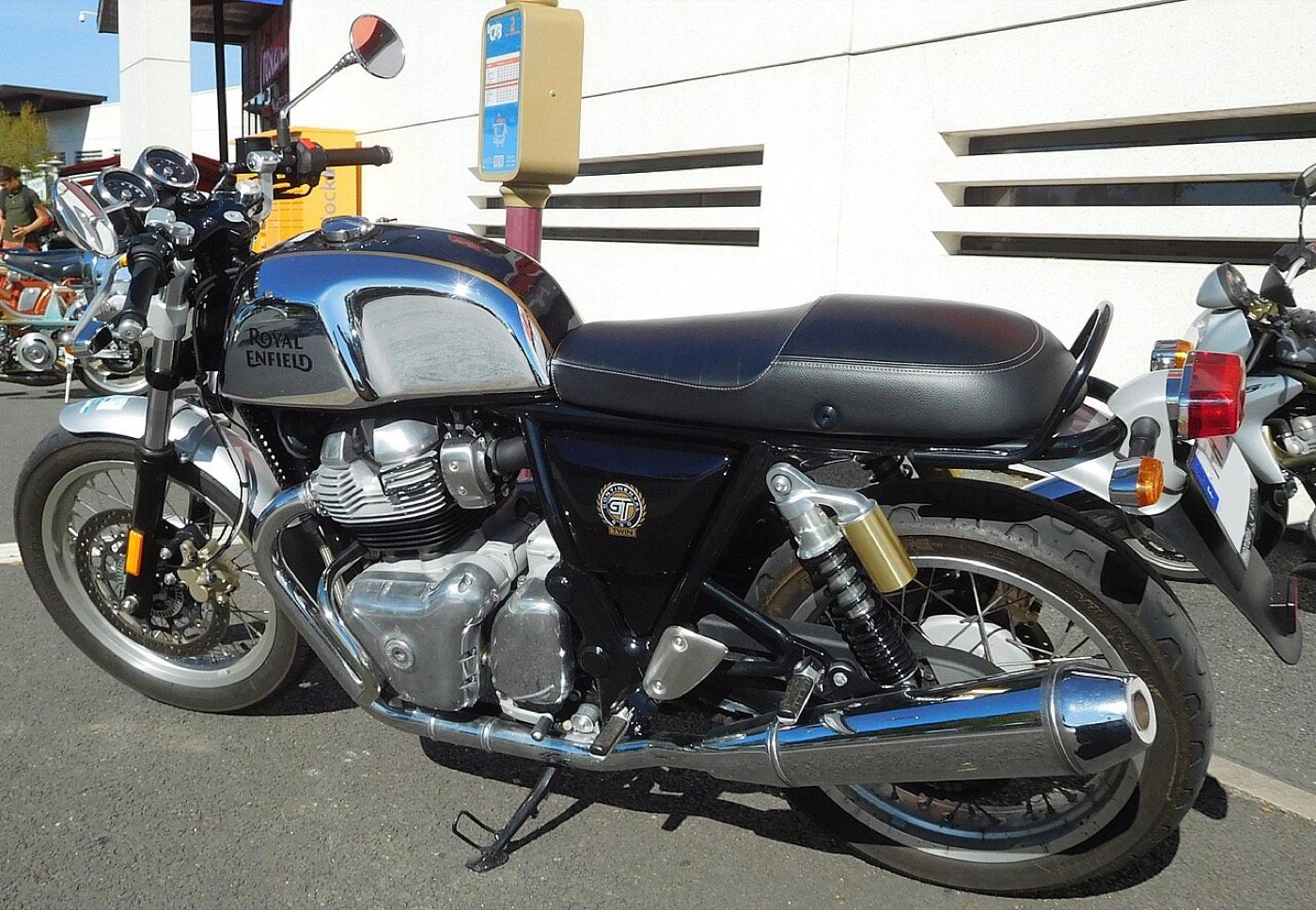
Royal Enfield Continental GT 650 review: the cafe-racer contract, signed in 52 Nm
On paper — MotoSutra has not ridden this bike — 47 bhp, 198 kg and a 783 mm saddle make the GT the best-sounding twin in the country and a love letter with a wrist-pain appendix; the appendix is what the clip-ons imply on the days you forget what a cafe-racer contract costs.
- Royal Enfield Continental GT 650 ₹3.12 lakh

Editor & Publisher
MotoSutra editorial rating
4.4/5
Overall score across 7 rated dimensions
MotoSutra editorial rating: 4.4 out of 5
Lowest rated
Features
3.7/5
Equipment & rider features
- Performance Power, acceleration & riding dynamics 4.3/5 Very strong
- Features Equipment & rider features 3.7/5 Good
- Design Styling, ergonomics & presence 4.7/5 Excellent
- Safety Build quality, safety equipment & ratings 4.0/5 Very strong
- Interior Rider ergonomics, seat & practicality 3.9/5 Good
- Efficiency Mileage, range & running costs 3.9/5 Good
- Comfort Ride quality & long-distance comfort 4.0/5 Very strong
Buy the GT 650 for the machine you ride on Sunday evenings, not the one you argue with on Monday morning: the ₹3.12 lakh single-seat motorcycle is the honest spec, and the ₹3.20 lakh Chrome is jewellery you will polish happily. If a pillion rides more than once a month, the Interceptor 650 at ₹3.19 lakh is the same engine with a warranty on your relationship. Everything else about this bike is exactly what the exhaust note promises.
MotoSutra editorial rating on a 5-point scale. Rated across 7 dimensions; unscored dimensions are omitted.
There is a specific moment new GT 650 riders describe, usually on the first flyover exit, where the bike is leaned into a sweep on the fat 150-section rear, the twin is rumbling through its 52 Nm plateau below the rev counter’s interest rate, and the brain files the machine under a category it did not know India sold. MotoSutra has not ridden the GT; what follows is a research-based reading of the documented specification and of the riding character that specification keeps implying. The 180-degree crank, the low-slung mass and the 783 mm saddle all point the same way, which is why this page is written around the moment rather than against it. Here is what the contract, read off the spec sheet, actually says.
The engine, which is the entire argument
The 648cc parallel twin fires at a 180-degree crank, which is not a spec-sheet trivia item but the source of the sound — the old-English double-beat that the industry has mostly tuned out of existence. The numbers are 47 bhp at 7,250 rpm and 52 Nm at 5,250, and the shape of those curves is the character of the bike: a broad, willing mid-range sweep that wants riding in the way a torque curve describes, with a top end that revs politely rather than wildly. The plateau’s position implies a motor that, from 3,000 rpm in sixth, has torque in hand on a motorway incline; from 5,000 the curve is still climbing; past 7,000 it has said its piece and the rev-limiter reads as a tidy full-stop rather than a bang.
The six-speed gearbox earns its own paragraph on the strength of the hardware list: a precise gate, an assist-and-slipper clutch that is meant to keep the rear line composed on a hard two-gear drop into a roundabout. On paper, at ₹3.12 lakh it is the most promising transmission Royal Enfield has put on sale, and the marque has quietly made the assist-and-slipper unit the family feature.
Power delivery, weight and the chassis they hide
On paper 47 bhp into 198 kg is not a headline. The numbers read in the rider’s favour once you place them: the mass is low, the tank narrows at the knees, and the 783 mm saddle means a tall rider plants both feet and a shorter one feels planted rather than perched. How light the bike actually feels on the move is a question only a test-ride can answer; the kerb-weight figure only tells you it is the 198 kg when it is parked on a soft shoulder.
On the documented hardware the chassis is the most finished thing Enfield has ever mass-produced: a twin-downtube cradle, a 41 mm fork on a non-adjustable unit, and rear twins with six-step preload. Whether it tracks the claimed 150 km/h ceiling without anxiety, or absorbs this country’s specific mix of patch and expansion joint, is a question only a road test can settle — but the geometry and the 18-inch front wheel point to generous corner-entry confidence, and the 52 Nm mid-range is positioned low enough that a rider on the throttle early out of an apex in third should find the bike agreeing rather than arguing.
Ergonomics: the contract’s fine print
The clip-ons are low and the tank is flat, which puts the rider forward, committed and slightly at the mercy of the wrists. MotoSutra’s reading of that geometry is a comfortable hour and a negotiation after that; how many hours before a full touring day curdles is a question only a long ride can answer. The pegs sit a touch forward of proper rearsets, so the knees are unbent in a way that reads as relaxing on paper. The pillion arrangement — available on the ₹3.16 lakh variant in this listing — is a pad with optimism rather than a seat with passenger rights; footpeg stretch and zero grab rail send the honest message that this is a single-rider machine.
The compensations are real. The seat is the lowest here, so the traffic-light confidence of a 650 belongs to riders whom every other big bike hands a tiptoe problem. The bars are low but not brutal, the mirrors are properly placed, and at a 100-120 km/h cruise in sixth — the listed useful corridor — the twin is in the smooth register the balancer shafts exist to deliver. This is where most of the odometer should accrue.
Mileage and range, the least romantic paragraph
The claim is 27 kmpl. MotoSutra estimates that ridden the way the twin invites — back roads used, expressway legs at a genuine cruise — the realistic figure is in the low 20s, with the claim reachable only by riders who treat sixth gear as a lifestyle. On that estimate the 12.5-litre tank gives roughly 250-310 km of working range, nearer the 330 km figure on a disciplined highway run. For touring, the fuel-stop map matters more than the power figure, and the GT asks to be planned like a sports car rather than a tourer.
Equipment: the 3.7 in the table, explained
Twin round pods with a small LCD gear inset, a 12 V socket under the seat, and the optional Tripper navigation pod if you must. No TFT, no ride modes, no traction control, no quickshifter — at ₹3.20 lakh for the Chrome, the GT’s equipment list is a deliberate anachronism, and part of the charm for the buyer who chose a retro twin over a gadget scooter precisely on principle. Dual-channel ABS is standard; there is no official crash-test rating for motorcycles in this price space, which is the sentence that belongs with the five-star ratings quoted for cars. The brake hardware — twin front discs with radial-mount calipers — is the strongest on the list, and on the spec alone deserves the compliment the rest of the equipment withholds; how progressive the lever actually feels is a test-ride question.
Verdict
The Continental GT 650 asks for a trade, states the terms plainly, and pays extraordinarily well for them: the character of a 1960s racing twin, the best gearbox the marque has ever built, low-seat confidence and a chassis that flatters, in exchange for wrists, a decorative pillion pad and an equipment list that predates the smartphone. Ride it the way the torque curve describes — long third-gear sweeps, early throttle, expressway legs in sixth — and it is 4.7 design points and a 4.4 overall for reasons that outlive the spreadsheet. Buy the single-seat base at ₹3.12 lakh, spend what you save on gloves that fit and a tank bag that shifts your weight forward, and you have signed the best contract in Indian motorcycling.
Pros and cons
What we like
- The 648cc twin’s 52 Nm at 5,250 rpm arrives in a sweep the tacho half-describes and the body entirely understands
- At 198 kg with the mass low and the 783 mm saddle, it is the most confidence-giving 650 here for riders of every height
- The six-speed box with assist and slipper clutch is the best-shifting Royal Enfield has ever built — backshifts under braking are a pleasure, not a gamble
- The 180-degree crank sound is the last genuinely characterful note in Indian motorcycling, and it belongs to this bike
What we would change
- The cafe-racer geometry is a contract and it collects its dues: clip-ons and a flat low seat make two hours a wrist conversation
- The pillion pad is decorative; this is a single-rider motorcycle with a passenger-shaped suggestion behind the saddle
- The claimed 27 kmpl quietly assumes a relaxed right foot; ridden the way the twin invites, MotoSutra’s estimate band is low-20s
- Equipment is 2015: twin pods, no TFT, no ride modes — a ₹3.2 lakh motorcycle that waves away screens
Frequently asked questions
What is the Continental GT 650 price in this catalogue?
From ₹3.12 lakh for the single-seat motorcycle to ₹3.20 lakh for the Chrome on MotoSutra’s unverified catalogue, ex-showroom Delhi NCR — a very narrow ladder, because the only real options are paint and a passenger perch.
What mileage does the GT 650 give?
The claim here is 27 kmpl. MotoSutra estimates relaxed highway riding at or slightly above the claim and enthusiastic back-road use in the low-20s, with a 12.5-litre tank, so range is a planning item on long days either way.
How fast is the GT 650?
The listed ceiling is 150 km/h, but the useful number is the cruise: 100-120 km/h in sixth with the balancer shafts smoothing everything, which is the corridor where the twin covers ground quickest without the rider noticing.
Is the GT 650 comfortable for long rides?
For two hours, superbly; after three, the clip-ons and saddle begin a formal complaint with your wrists and sit bones. The 783 mm seat is the compensating gift — the lowest here, and the reason shorter riders stand this bike up at signals without drama.