Bike comparison
Classic 350 vs Hunter 350: the same engine, ₹44,000 apart
Royal Enfield sells one 349cc single in two frames. We weigh the documented equipment, ergonomics and geometry against the price gap to find whether the difference is hardware, posture or simply the object you want parked outside your house.
- Royal Enfield Classic 350 ₹1.93 lakh
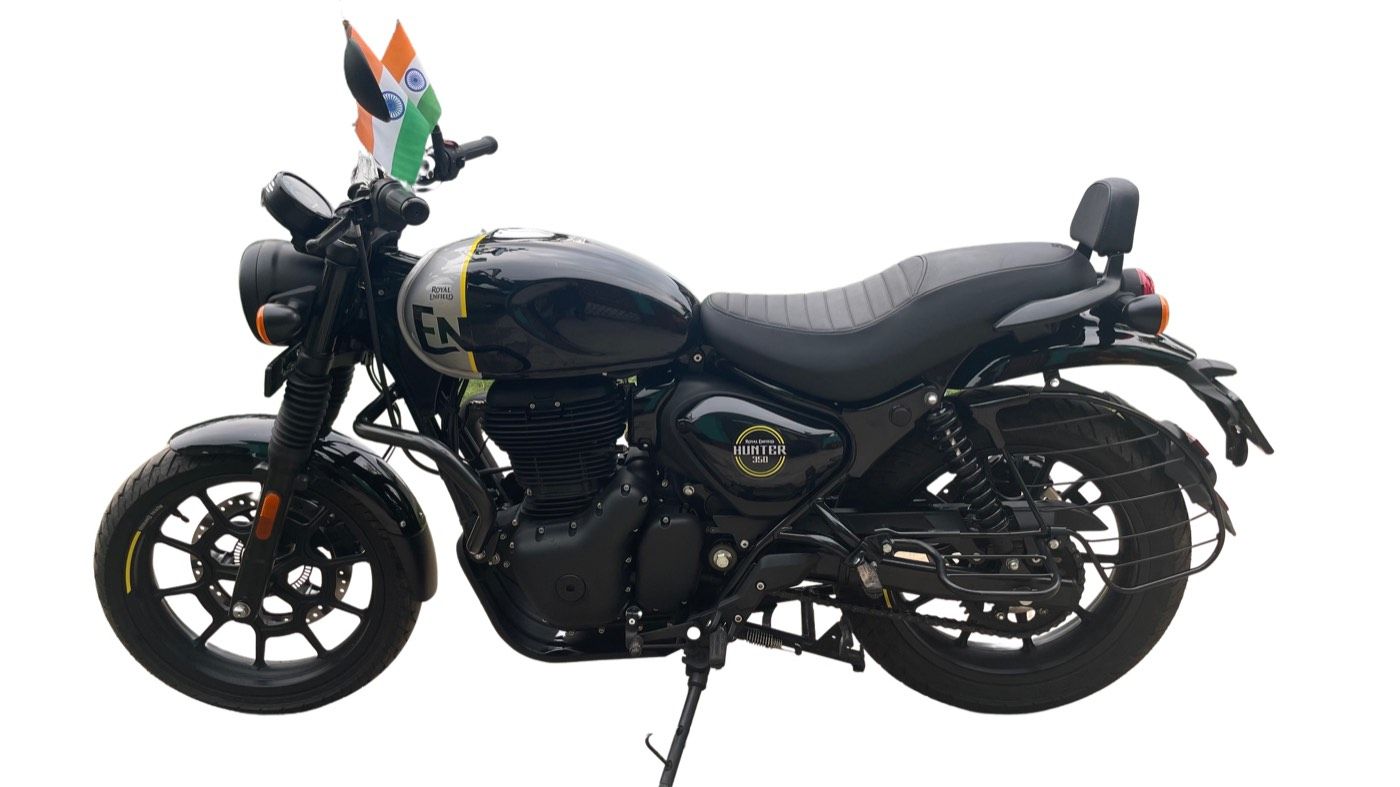
- Royal Enfield Hunter 350 ₹1.49 lakh

Editor & Publisher
Head to head
- Price Royal Enfield Hunter 350 ₹1.49-1.56 lakh against ₹1.93-2.05 lakh ex-showroom Delhi NCR, for the same engine and gearbox.
- City usability Royal Enfield Hunter 350 181 kg against 195 kg, a slimmer tank and narrower bars. The gap you attempt on the Hunter is the gap you look at on the Classic.
- Road worthiness Royal Enfield Hunter 350 179 mm of ground clearance against 135 mm, which is the lowest of any motorcycle in this class.
- Highway composure Royal Enfield Classic 350 The extra mass and the longer wheelbase make the Classic the settled bike at 100 km/h; the Hunter works for the same speed.
- Two-up comfort Royal Enfield Classic 350 A wider, flatter seat, more pillion room and a backrest on the Chrome. Comfort scores 4.6 against 4.1 in this catalogue.
- Fit and finish Royal Enfield Classic 350 Chrome mudguards, better paint and switchgear that makes the Hunter look like the budget option it is.
- Running costs Royal Enfield Hunter 350 Same service schedule and the same claimed 36 kmpl, but a 15-litre tank against 13.5 litres, and cheaper tyres.
- Resale Royal Enfield Classic 350 The Classic is the most liquid leisure motorcycle in the country; the Hunter is bought by price-sensitive riders, and the used market knows it.
| Specification | Royal Enfield Classic 350 ₹1.93 lakh | Royal Enfield Hunter 350 ₹1.49 lakh |
|---|---|---|
| Ex-showroom price | ₹1.93 lakh | ₹1.49 lakh |
| Engine | 349 cc | 349 cc |
| Power | 20.2 bhp | 20.2 bhp |
| Torque | 27 Nm | 27 Nm |
| Mileage | 36 kmpl | 36 kmpl |
| Top speed | 120 kmph | 115 kmph |
| Gearbox | Manual | Manual |
| Kerb weight | 195 kg | 181 kg |
| Safety | Dual-channel ABS standard on every variant; no official crash-test rating exists | Dual-channel ABS as standard; no crash-test rating exists for this model |
| Body type | Cruiser | Commuter |
| Status | Available | Available |
| Categories won | Royal Enfield Classic 350 wins 1 of 11 | Royal Enfield Hunter 350 wins 2 of 11 |
Only specifications present in both records are listed. figures without a named source document are unverified motosutra catalogue estimates, not official specifications. confirm current numbers with the manufacturer.
Ask the question properly and this is not a comparison at all: how much of the Classic 350’s price is the machine, and how much is the object? Royal Enfield sells the same engine and the same gearbox in two frames ₹44,000 apart — a 30 per cent premium for a wider seat, some chrome, a headlamp casing and an accessory counter. MotoSutra has ridden neither bike, so what follows works out what that money buys from the documented hardware and the physics of the two frames rather than from a week in the saddle.
The engine, which is the point of both
The 349cc single is one of the very best city engines sold anywhere. Its 27 Nm arrives by 3,400 rpm and stays there, so both bikes should pull away from a signal in second without clutch finesse, and both can cruise in top gear at 60 km/h with the throttle barely open. Neither is quick in the way a 450 is quick — 20.2 bhp at 6,100 rpm is a figure you stop thinking about — but the useful band is so wide that you rarely reach for it.
Straight-line performance is identical by definition — same engine, same gearbox, same exhaust note — and that is the honest headline: nothing separates the two on paper. What separates a Classic from a Hunter is everything the engine is bolted into.
In traffic the cheaper one wins
The Hunter is 14 kg lighter on the scale, and mass like that is worth far more than the number at low speeds; with its narrower bars and slimmer tank, the gap you will attempt on a Hunter is a gap you will look at on a Classic. At 181 kg against 195 kg the difference should tell loudest in the first ten minutes, turning the bike around in a parking space.
Then the ground clearance, which is not a small thing here. The Hunter rides on 179 mm; the Classic has 135 mm, the lowest of any motorcycle in this class and the source of its most common complaint. A poorly filled pothole or an aggressive breaker is something the Hunter goes over and the Classic goes around — that is what 44 mm of clearance gap means on Indian road surfaces.
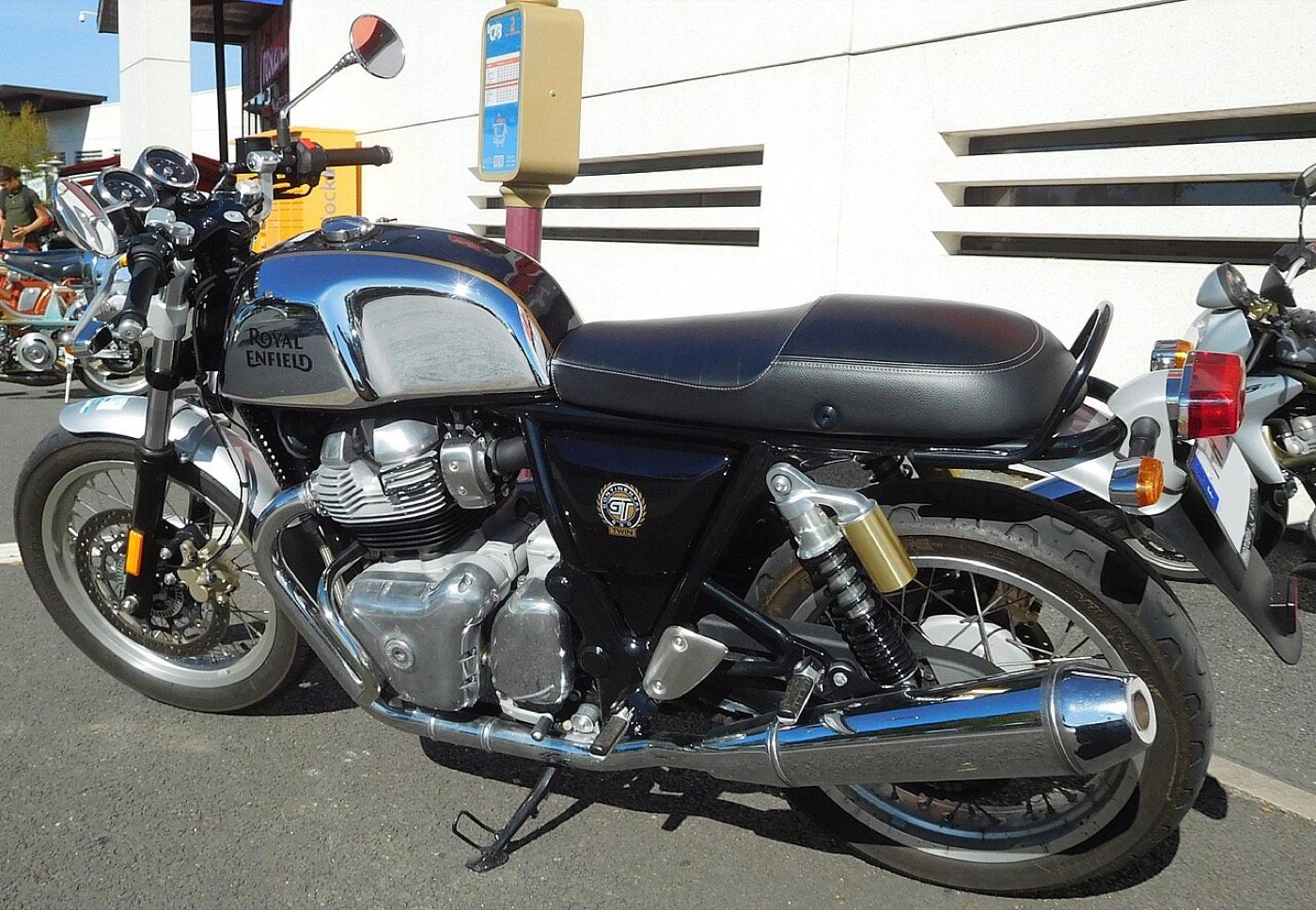
The counter-argument is the saddle. The Hunter’s 790 mm seat is easier to flat-foot, which sounds like an advantage until you notice the trade the geometry implies: the peg position puts the knees higher and taller riders end up perched rather than seated. On the Classic, the 805 mm saddle and down-forward pegs produce the relaxed position that made the model a middle-age favourite.
The Hunter is the motorcycle you ride to work. The Classic is the motorcycle you ride at the weekend and then describe to people at work.
On the highway, where mass pays for itself
This is the section the Hunter’s case rests on, and the physics does not favour it. The Classic’s 195 kg and longer wheelbase are the recipe for a settled machine at a genuine 100 km/h: mass soaks up the mid-corner ruts a light bike skips across, and the steadier front end is the one that does not wander in the wake of a bus. The Hunter’s lighter frame is more exposed to crosswind and turbulence off heavy vehicles, its shorter wheelbase gives crisper but less patient direction changes, and its firmer rear-suspension spec is the kind that kicks over sharp expansion joints and reaches the spine. MotoSutra reasons from those numbers rather than from ridden kilometres, but this is the same trade the CB350 comparison surfaced, and the Classic’s mass earns its keep on coarse tarmac at exactly the speeds Indian expressways are travelled.
Wind protection is thin on both spec sheets, and the Classic’s halogen beam does not throw far enough on an unlit highway; the Hunter’s Dapper trim at least carries an LED lamp.
Trim, pillion and the two-up question
Buyers who carry a passenger will not need a spreadsheet to work this out. The Classic’s seat is wider and flatter, the pillion has more room and a proper grab rail, and the Chrome adds a backrest. Its catalogue comfort score of 4.6 against the Hunter’s 4.1 is MotoSutra’s number for that dimensional gap.
The Hunter’s saddle is narrow and its pillion pad minimal, and no accessory makes two-up work on the Classic’s terms. Where the Hunter leads is everyday detail: a tubeless alloy option on the Street against the Halcyon’s spoked wheels, and 15 litres of fuel against 13.5 at the same claimed 36 kmpl.
Fit and finish is where the discount shows: the Classic’s paint, switchgear and chrome are a class apart, while the Hunter is functional and visibly costed in the places your hands look.
Ownership, and what it returns
Running costs are close: the same engine and the same service schedule, and MotoSutra expects mid-30s kmpl with a light right hand against a claim of 36. Tyres are the real difference: the Hunter’s 17-inch rubbers cost less than the Classic’s 19- and 18-inch fitments, and a tubeless puncture is a ten-minute job where a spoked wheel with a tube is a half-day — a four-figure saving over three years.
Against it sits resale. The Classic is the most liquid leisure motorcycle in India and holds value better than almost anything at this price; the Hunter’s used numbers are softer, because it is bought new by price-sensitive riders.
Which one to buy
Buy the Hunter if you ride alone, mostly in a city, on roads that are not good, and if the ₹44,000 saved buys gear, a tank bag and three years of servicing. It is the rational choice and the easier motorcycle.
Buy the Classic if a passenger rides more than twice a month, if you keep motorcycles for a long time and care what they return, or if you want the one Royal Enfield that looks like the idea of itself. That is not an irrational reason; it is the reason the Classic exists.
And if what you actually want is pace rather than torque, both are the wrong bike, and the same company’s 450 is the answer.
The two models
Frequently asked questions
Is the Hunter 350 the same engine as the Classic 350?
Identical. Both run the 349cc J-platform single with 20.2 bhp at 6,100 rpm and 27 Nm at 3,400 rpm, through the same six-speed gearbox. Enfield’s saving on the Hunter came out of the bodywork, the trim and the chrome.
Which is better for long tours?
The Classic, on seat width, pillion room and the softer suspension spec. The Hunter will cover 300 km in a day, but the dimensions say the flat narrow saddle and the firmer rear end make it the more tiring of the two over that distance.
Which should a first-time buyer choose?
The Hunter, at least until the difference in price stops mattering. It is 14 kg lighter, sits 15 mm lower, has 44 mm more ground clearance and dual-channel ABS on every variant, which is the same safety hardware the Classic carries.