Car comparison
Maruti Suzuki Swift vs Dzire: same engine, different argument
One 1.2-litre petrol, one gearbox, two bodies and a ₹47,000 gap at the entry price. We separate the hatchback from the sedan on the terms that actually decide this purchase.
- Maruti Suzuki Swift ₹5.84 lakh
- Maruti Suzuki Dzire ₹6.31 lakh

Editor & Publisher
Head to head
- Entry price Maruti Suzuki Swift The Swift Sigma starts at ₹5.84 lakh against the Dzire Sigma at ₹6.31 lakh, ex-showroom Delhi NCR.
- Top-spec price Maruti Suzuki Swift ₹8.96 lakh for the ZXi+ Sport against ₹9.24 lakh for the Dzire ZXi AMT.
- Airbags as standard Maruti Suzuki Dzire The Dzire lists six airbags across every variant. The Swift withholds them until the ₹7.41 lakh ZXi.
- Boot space Maruti Suzuki Dzire 382 litres against 265, which is the entire reason sedans still sell.
- Claimed efficiency Even Both are listed at 25 kmpl from the same 1,197cc engine and five-speed manual.
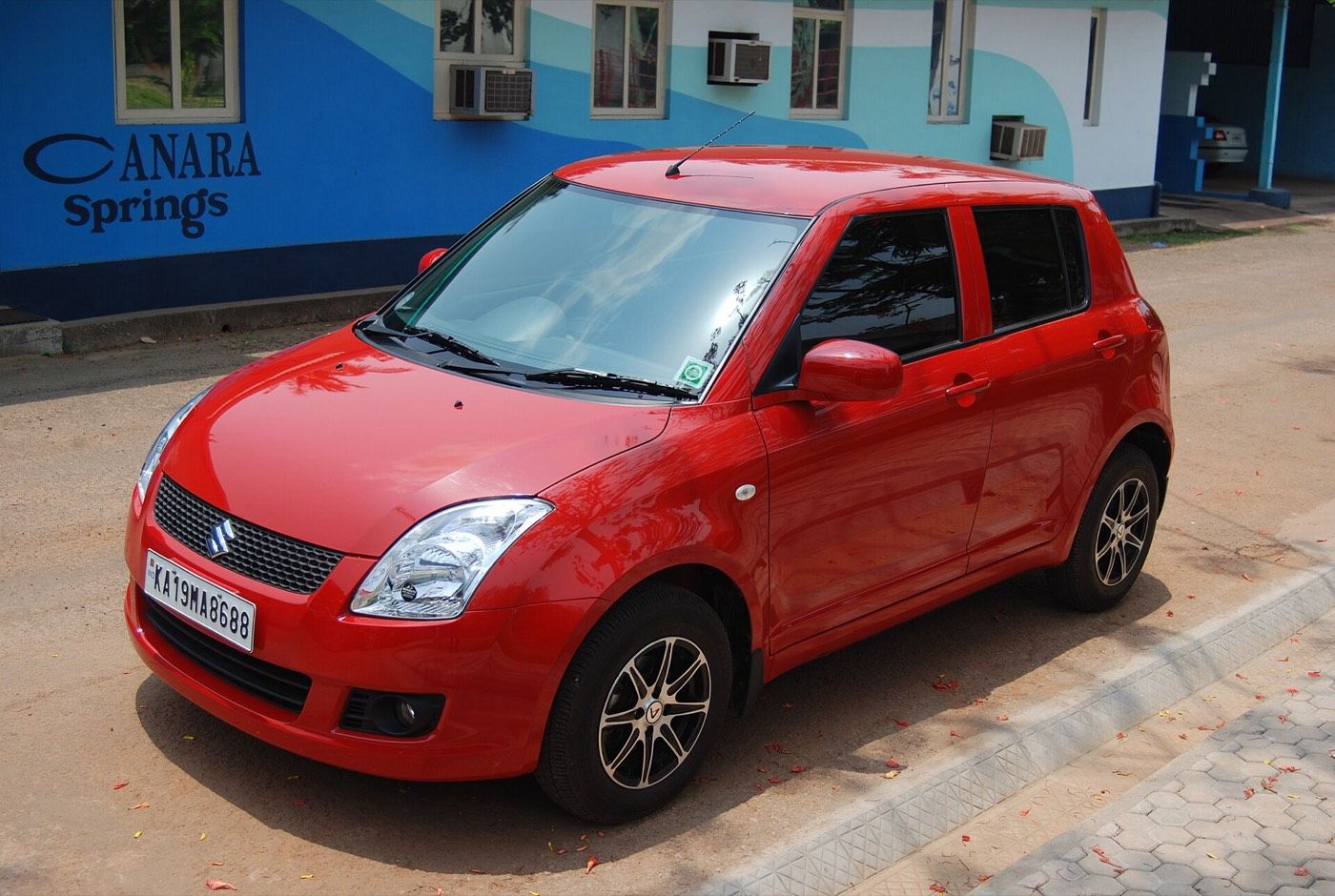
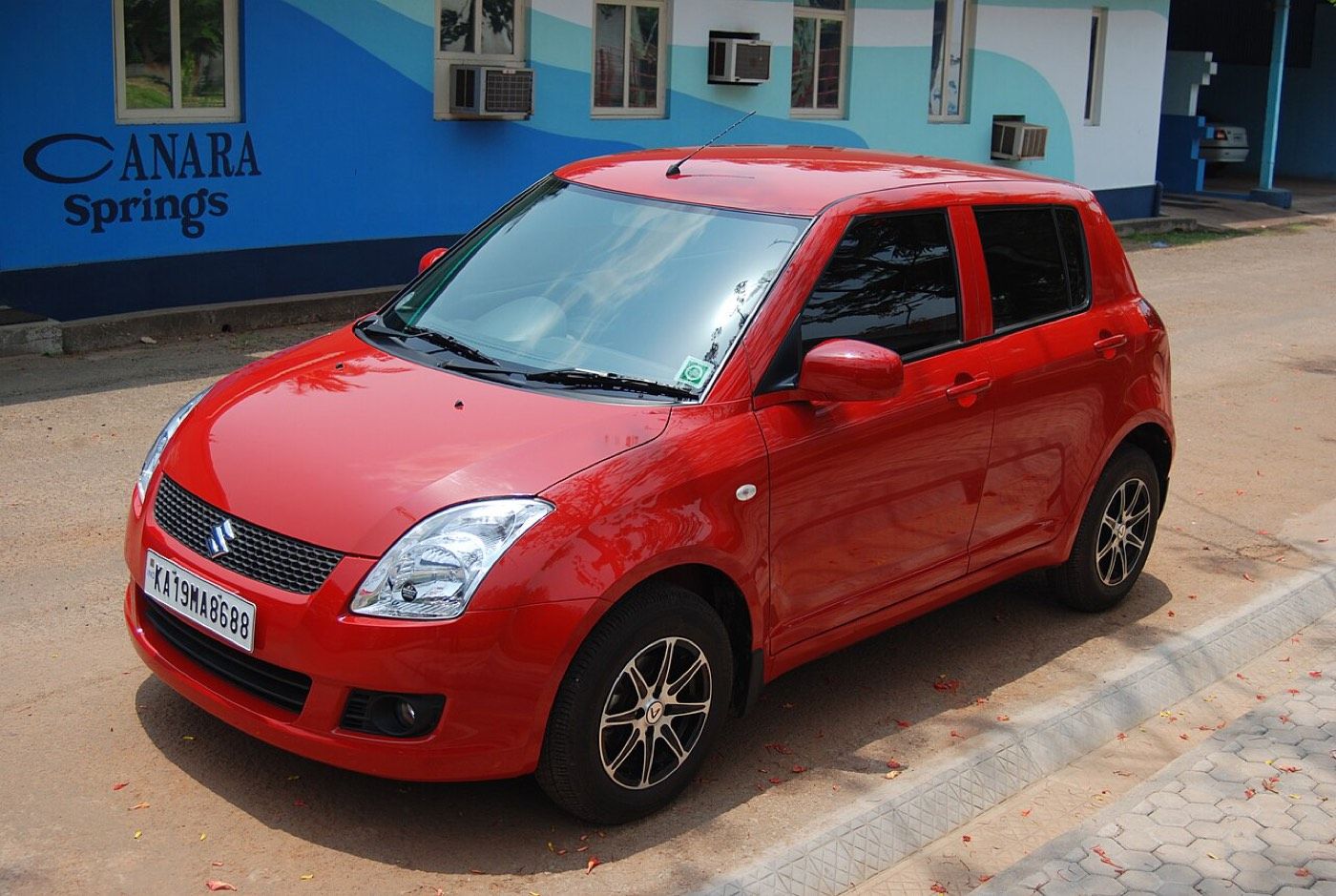
- City usability Maruti Suzuki Swift The Swift is 135 mm shorter, has 22 mm more ground clearance at 185 mm, and gives a better view over the bonnet.
- Resale and parts Even Neither is a wrong answer; both are the most liquid small cars in the country.
| Specification | Maruti Suzuki Swift ₹5.84 lakh | Maruti Suzuki Dzire ₹6.31 lakh |
|---|---|---|
| Ex-showroom price | ₹5.84 lakh | ₹6.31 lakh |
| Engine | 1197 cc | 1197 cc |
| Power | 79 bhp | 79 bhp |
| Torque | 108 Nm | 108 Nm |
| Mileage | 25 kmpl | 25 kmpl |
| Top speed | 152 kmph | — |
| Gearbox | Manual / Automatic | Manual / Automatic |
| Kerb weight | 966 kg | — |
| Seating | 5 | 5 |
| Boot space | 265 litres | 382 litres |
| Safety | 2 stars | 3 stars |
| Body type | Hatchback | Sedan |
| Status | Available | Available |
| Categories won | Maruti Suzuki Swift wins 1 of 13 | Maruti Suzuki Dzire wins 1 of 13 |
Only specifications present in both records are listed. figures without a named source document are unverified motosutra catalogue estimates, not official specifications. confirm current numbers with the manufacturer.
The Swift and the Dzire are the same mechanical purchase wearing different coats: one 1,197cc K-series four, one five-speed manual, one AMT, one set of 185/65 R15 tyres and one MacPherson-strut front axle. Output figures are identical to the last decimal, so this is not really a contest about engine; what you are choosing between is a tail, a price sheet and one genuinely different safety decision.
MotoSutra has driven neither car, and for once it hardly matters: with one engine, one gearbox, one axle and one tyre size shared, the question of how much a shape matters is mostly answered by the documented dimensions rather than a week of borrowed errands.
How they drive, and where they part company
On smooth tarmac the two should be indistinguishable: the same light clutch, the same short-geared box, the same steering rack bolted to the same axle, so any separating must come from the bodies. Both are quicker than their numbers suggest from a standstill, because both are around 950-975 kg.
The divergence starts when the road surface degrades. With four adults aboard, the Swift’s short rear overhang leaves the least cushioned end of the pair over bad road, and the tailgate takes the worst of it; the Dzire’s longer wheelbase-to-overhang ratio means it meets the same broken patch with the rear wheels arriving at a different, kinder interval. Empty, the Swift is the more comfortable car. Loaded, the sedan is — and if your usage is a full family twice a week rather than one person every day, that is a real difference. A test drive with the family aboard is where to check it, because this page can only reason from the geometry.
The other gap is one you only notice when you stop. The Swift’s 185 mm of ground clearance against the Dzire’s 163 mm turns an aggressive speed breaker from a two-brake manoeuvre into a scrape-and-flinch. The Dzire also has a longer rear overhang, which means you park it with more attention than the hatchback, whose shorter body and better rear visibility make a tight colony garage an easier conversation.
Space, and the boot argument
Front seats are the same car. The rear benches differ by roughly nothing in legroom; the Dzire’s is set up for two adults with real comfort and its flatter cushion offers slightly better thigh support, while the Swift’s is better shaped for a middle occupant. Head room goes to the Swift, which is 5 mm taller overall and has no boot lid to compromise the opening.
Then the boot, which is where this comparison is decided for a lot of households. The Swift carries 265 litres: two cabin bags and a fortnight of groceries, with the parcel shelf in place and the shopping under a cover. The Dzire carries 382 litres and a wider, lower opening, and swallows a large pram with the seat backs still up. If the household runs one serious shopping trip a week and the car has to hold it without a folded seat, no amount of hatchback enthusiasm closes a 117-litre gap.
Equipment, and where the money goes
Maruti prices the Dzire higher for nominally less equipment at the bottom of the ladder — the base Sigma loses the touchscreen and gets manual air conditioning in both cars — and the gap narrows upward. Two things are worth the money in either: the airbag count, and the AMT.
That is where the two cars separate sharply on value. The Dzire lists six airbags, ABS with EBD and stability control as standard equipment across the entire range, including the ₹6.31 lakh entry variant. The Swift reserves that hardware for the ZXi at ₹7.41 lakh and above; buy a Sigma or a Delta and you are in a two-star car without stability control or the full airbag set. Our two-star figure for the Swift is the catalogue’s own, and it is the number a Maruti showroom will not raise with you.
The automatics are equally revealing. The Swift ZXi AMT at ₹8.36 lakh arrives in a 2026 calibration Maruti documents as smoother than the previous unit, though it still hesitates on a camber from a standstill the way automated manuals do. The Dzire ZXi AMT at ₹9.24 lakh is the variant most fleet and family buyers settle on. Both AMTs are preferable to a clutch in traffic; neither is as good as a proper torque converter.
Running costs, which are the same
This is the easiest part of the review. Same engine, same gearbox, same service schedule at 10,000 km or one year, same oil grade, same filter prices. MotoSutra puts a normal service at roughly ₹3,800-4,400 on the Swift and the same figure on the Dzire.
On fuel, both claim 25 kmpl. MotoSutra’s realistic mixed-use band is 17-19 kmpl for either — the sedan’s extra length and marginally higher kerb weight accounting for a difference smaller than a driver’s right foot. In city traffic expect 15-16 kmpl, on an expressway run 22 kmpl. Plan a running budget on those, not on the claim.
Resale is the last tie-breaker, and it is close to a draw. Both are the most liquid used cars in India. The Swift changes hands faster in metros; the Dzire holds a marginally better percentage in smaller towns, where a sedan still reads as an upgrade rather than as a compromise.
Who should buy which
Buy the Swift if you drive mostly alone or with one passenger, if the commute includes bad road and tight parking, and if the boot you need is a weekly rather than a monthly one. It is the more usable car for the money and it is the one we would keep.
Buy the Dzire if the family fills the boot, if you want six airbags without paying for a mid-spec trim to get them, or if a sedan is a household requirement rather than a preference. In that last case, be honest about what you are buying: a very good appliance, not a very exciting car.
Buy neither, quickly, if a five-star structure is the first item on your list. Both of these are Maruti’s honest, economical, crash-test-average answer to a segment where the competition now scores higher.
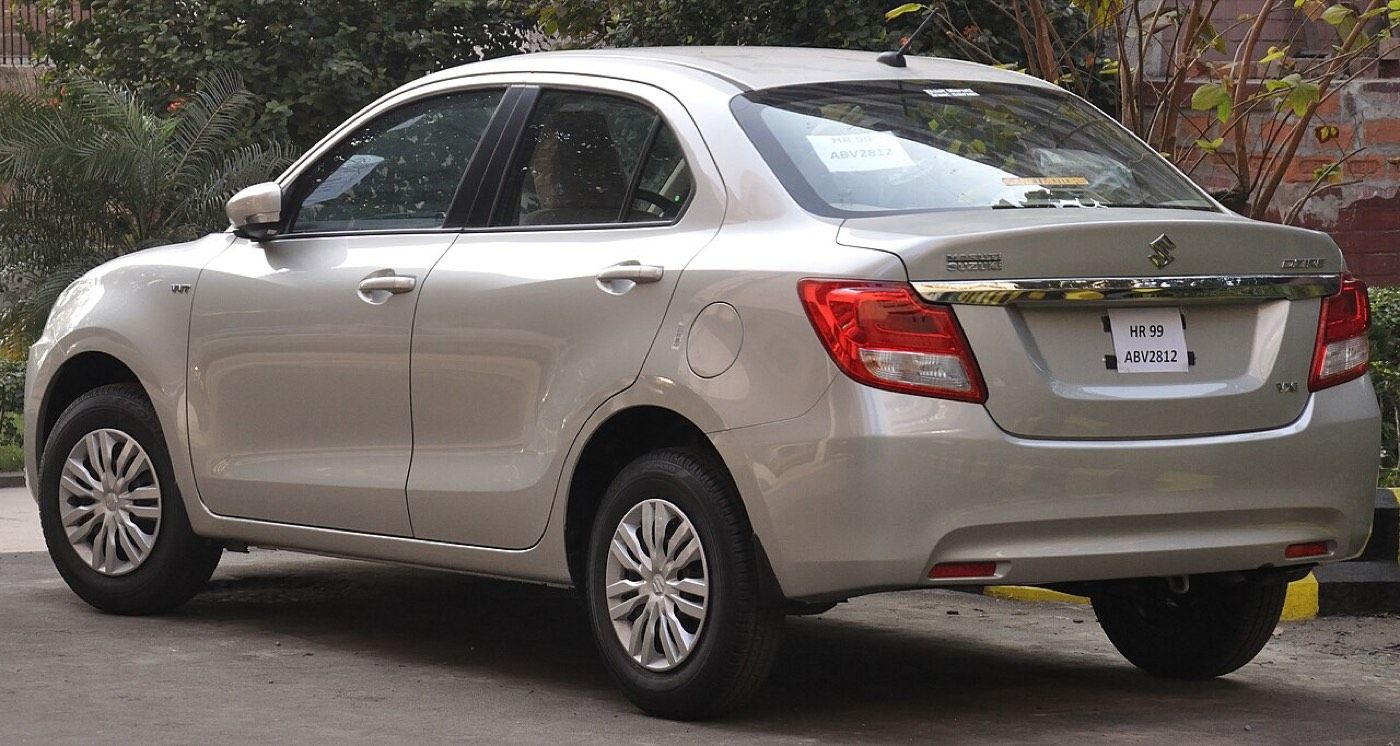
The two models
Frequently asked questions
Which is better value, the Swift or the Dzire?
The Swift, at every comparable trim. It costs ₹47,000 less at entry and around ₹40,000 less at the mid-spec level, and the equipment you get for that money is close to identical.
Is the Dzire safer than the Swift?
On paper, yes, and only just: the Dzire carries a three-star adult rating against the Swift’s two-star, and six airbags are standard across the Dzire range while the Swift reserves them for the ZXi and above.
Do they cost the same to service?
Yes. The 1.2-litre petrol and the gearbox are shared, the schedule is the same, and the published labour rates are identical on both. Only tyres and a few trim parts differ in price.