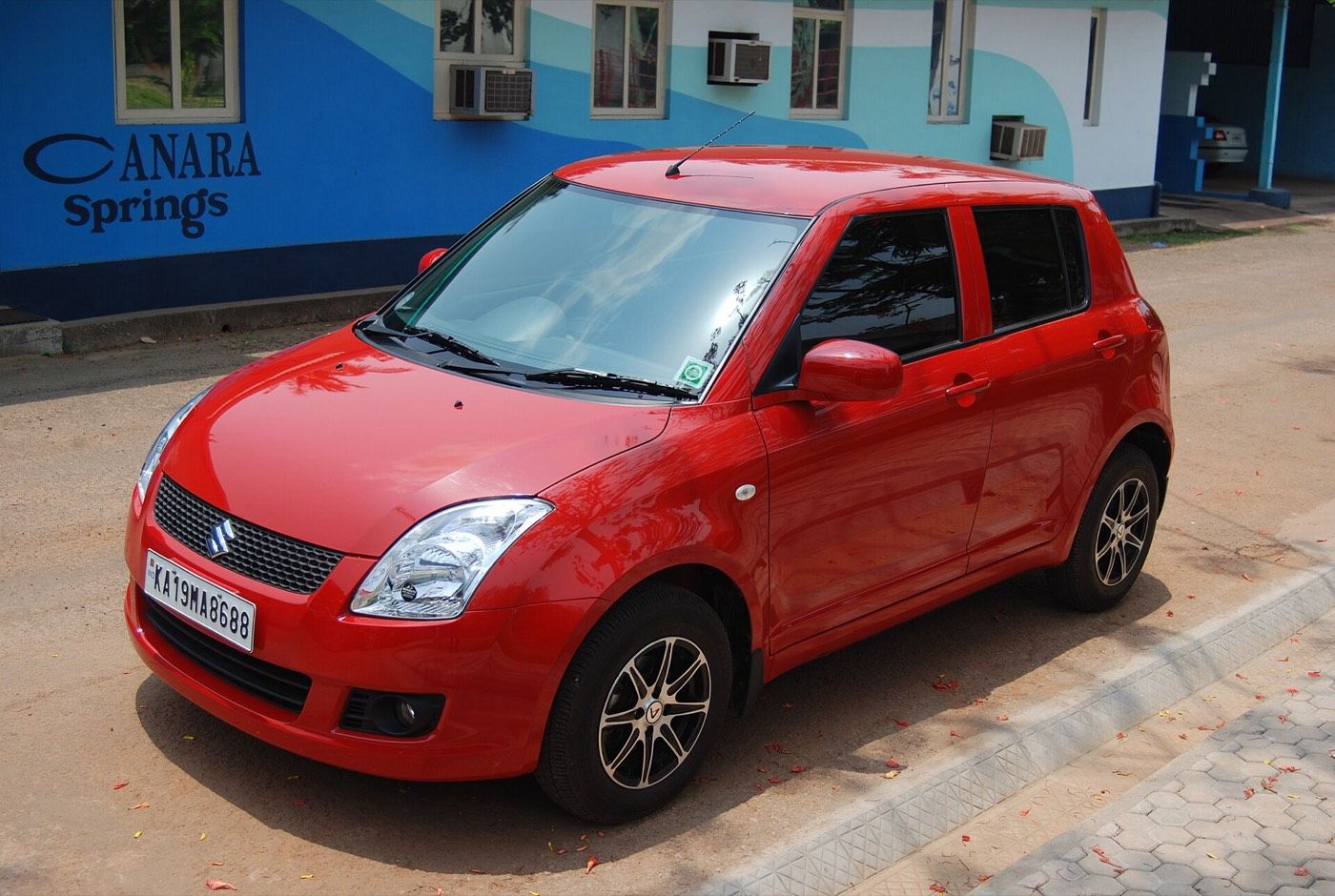
Car comparison
Maruti Suzuki Swift vs Baleno: the harder argument between two easy cars
Same 1,197cc family, different state of tune — 79 bhp against 89 — and a ₹26,000 entry gap that reverses at the top of the ladder. Maruti’s two hatchbacks make the strongest case against comparing hatchbacks by shape alone.
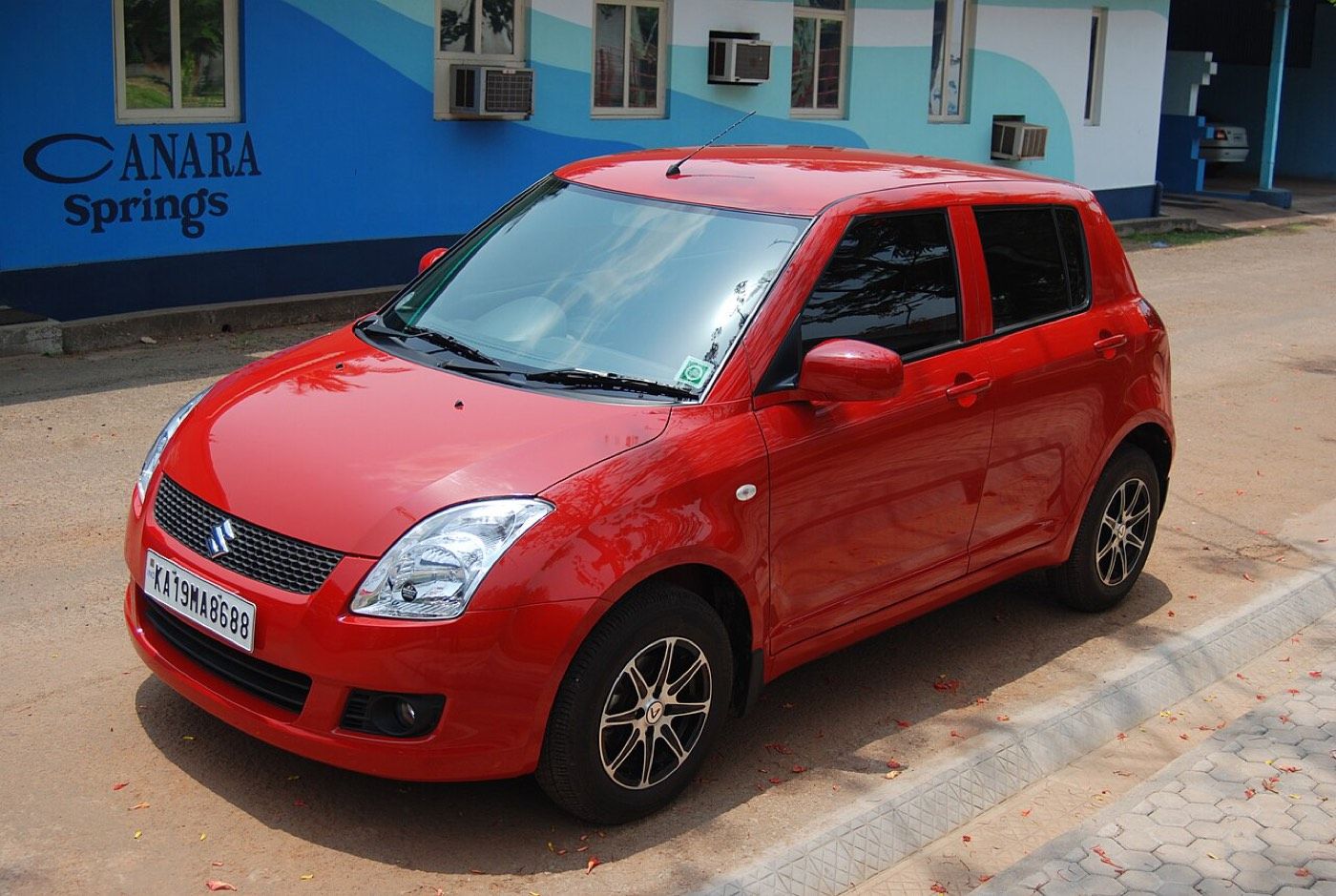
- Maruti Suzuki Swift ₹5.84 lakh
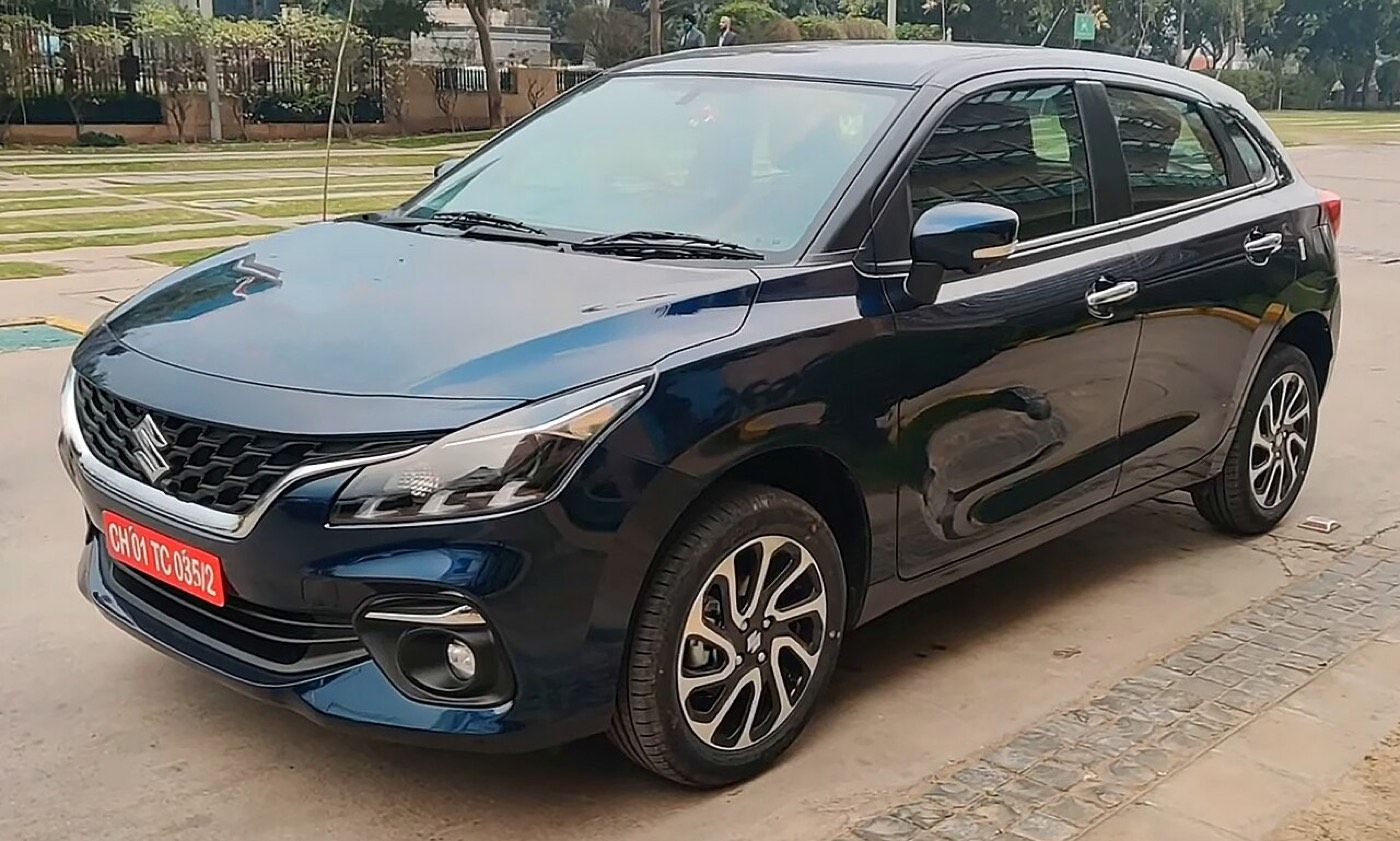
- Maruti Suzuki Baleno ₹6.1 lakh

Editor & Publisher
Head to head
- Entry price Maruti Suzuki Swift The Swift Sigma starts at ₹5.84 lakh against the Baleno Sigma at ₹6.10 lakh, ex-showroom Delhi NCR.
- Top-spec price Maruti Suzuki Baleno The reversal: ₹8.80 lakh for the Baleno ZXi+ AGS against ₹8.96 lakh for the Swift ZXi+ Sport, so the bigger car ends ₹16,000 cheaper.
- Engine performance Maruti Suzuki Baleno Both run 1,197cc four-cylinder petrols, but the Baleno’s dual-injection tune makes 89 bhp and 113 Nm against the Swift’s 79 bhp and 108 Nm.
- Boot space Maruti Suzuki Baleno 318 litres for the Baleno — its own listing notes that beats some sedans — against 265 for the Swift.
- Airbags and structure Maruti Suzuki Baleno Six airbags standard across the Baleno range on a three-star structure; the Swift reserves them for the ₹7.41 lakh ZXi and carries two stars.
- Claimed efficiency Maruti Suzuki Swift 25 kmpl for the Swift manual against 23 for the Baleno, from the same engine family at different states of tune.
- City usability Maruti Suzuki Swift The Swift is 130 mm shorter, has 15 mm more ground clearance at 185 mm, and its 966 kg kerb weight makes it the easier thing in traffic.
| Specification | Maruti Suzuki Swift ₹5.84 lakh | Maruti Suzuki Baleno ₹6.1 lakh |
|---|---|---|
| Ex-showroom price | ₹5.84 lakh | ₹6.1 lakh |
| Engine | 1197 cc | 1197 cc |
| Power | 79 bhp | 89 bhp |
| Torque | 108 Nm | 113 Nm |
| Mileage | 25 kmpl | 23 kmpl |
| Top speed | 152 kmph | — |
| Gearbox | Manual / Automatic | Manual / Automatic |
| Kerb weight | 966 kg | — |
| Seating | 5 | 5 |
| Boot space | 265 litres | 318 litres |
| Safety | 2 stars | 3 stars |
| Body type | Hatchback | Hatchback |
| Status | Available | Available |
| Categories won | Maruti Suzuki Swift wins 2 of 13 | Maruti Suzuki Baleno wins 3 of 13 |
Only specifications present in both records are listed. figures without a named source document are unverified motosutra catalogue estimates, not official specifications. confirm current numbers with the manufacturer.
The Swift and the Baleno share an engine family, a brand, a service counter and a customer’s spreadsheet, and Maruti has spent years pretending they don’t compete. They do. The Swift is the volume hatchback at ₹5.84-8.96 lakh; the Baleno is the longer, wider, more expensive-seeming hatchback at ₹6.10-8.80 lakh, which is the tell: their ladders overlap so completely that the ₹26,000 entry gap reverses into a ₹16,000 advantage for the Baleno by the top rung. And unlike the Swift-Dzire question, this one isn’t settled by a tail — both cars have the same shape and very different arguments about what a hatchback is for. One 1,197cc engine family, tuned to 79 bhp in the Swift and 89 in the Baleno; two structures with a star between them and an airbag policy each; 265 litres against 318. Read the spec sheet in this order and the case looks over. Drive both, and it is only the beginning.
How they drive, which is closer than the bhp suggests
The 10-horse separation is real but easily oversold, because the cars weigh and gear differently — and since MotoSutra has driven neither, this section reads the two ratio lists rather than a commute. The Swift is the lighter, shorter-geared city car: 966 kg on this catalogue’s record, and on paper its 79 bhp should present as eager around town because the box is always in the power band. The Baleno has the stronger engine in the more demanding outfit — longer body, wider 185/55 R16 tyres — and where it wins is the place the Swift’s gearing can’t fake: on the highway, at 100 km/h in top, the Baleno’s dual-injection 1.2 pulls cleanly without a downshift to stay in the conversation, exactly as its own listing claims. Both offer automated manuals near the top — the Swift ZXi AMT at ₹8.36 lakh, the Baleno ZXi+ AGS at ₹8.80 — with the same caveat for both: smoother than the AMTs of old by Maruti’s own revisions, still not a torque converter.
The ride splits the same way space does, on the documented setups rather than a bench race. The Swift is the firmer, shorter car, and its own record notes a tail that reports the worst of broken tarmac, especially with four aboard; the Baleno’s longer 2520 mm wheelbase — 70 mm more — meets the same bumps on kinder geometry, and its own record concedes only that road noise intrudes on rough tar. Neither is a bad mannered car. On paper the Swift is the more fun one when empty; the Baleno is the better one when not.
Space, and the 53-litre fact
Front seats, both fine. Rear benches, a genuine separation: the Baleno has more knee room on its longer wheelbase, more shoulder room on its 1,745 mm width, and door bins and seat contours designed around adults rather than around a crash of cost targets. Head room goes to the Swift — it is 20 mm taller at 1,520 mm and its roofline is more upright — which is the one number in this section that belongs to the smaller car.
Then the boot, which is not really contested: 318 litres against 265. The Baleno’s own listing points out the figure beats a few sedans at similar cost, and it is the number that turns the car from “hatchback” into “family car with a hatch.” Two cabin bags and a fortnight of groceries fits the Swift with the parcel shelf in place; the Baleno takes the same shop and the pram and the weekend bag without anyone negotiating with the parcel shelf. If the household’s only car has to be a small SUV sometimes, that is the whole argument, and the Swift has no counter except folding a seat every time.
Equipment and the safety policy gap
Baleno first: six airbags, ABS with EBD and stability control standard across every variant in this listing, a three-star adult crash score, and top trims with a heads-up display, 360-degree camera and wireless charging — options its own record notes put the list “within touching distance of compact SUVs that cost two lakh more.” The Swift fits its six airbags and stability control from the ₹7.41 lakh ZXi up, carries a two-star score in this catalogue, and its base Sigma is a plainly equipped car in both cars’ shared tradition.
The Swift’s equipment case is honesty-shaped: you can buy a ₹5.84 lakh car that does exactly what it costs, and its listing is blunt that buy-the-base is mostly sheet metal — a criticism Maruti aims at its own Sigma and the Baleno’s alike. But if the safety-first household is reading, the Baleno gives it the whole kit at the entry price for ₹26,000 more, and that is the cheapest insurance premium in this catalogue.
Running costs, the Maruti draw
Same family engine, same 10,000 km or annual schedule, near-identical service quotations at the same counter — the only meaningful difference on the ledger is fuel: claimed 25 kmpl against 23, with MotoSutra estimating around 16-19 for the Swift and 16-18 for the Baleno in mixed use, so real-world the gap is smaller than the brochure admits. Resale is the Swift’s last, strongest card: the best-selling hatchback in the country changes hands faster than anything here, and the Baleno, despite its size advantage, has always lived one rung below it on the used lot.
Who should buy which
Buy the Swift if the car is mostly a one-or-two commuter, if the route includes broken tar and tight garages — 130 mm of body and 185 mm of clearance are real city currency — and if you measure ownership cost partly in what it fetches at trade-in. On its dimensions it remains the more likeable drive empty.
Buy the Baleno if anyone else rides regularly, if the boot is usage rather than aspiration, and if you refuse to pay extra for airbags — which, at ₹6.10 lakh with six standard and a three-star shell, you no longer have to. The uncomfortable truth for the Swift is that the Baleno now beats it on engine, space, safety and top-end price, and the only categories the little car still owns are economy, resale and the way it hides both in traffic.
The two models
Frequently asked questions
Which is better value, the Swift or the Baleno?
At the top of the ladder, unambiguously the Baleno: ₹8.80 lakh for the ZXi+ AGS buys the stronger 89 bhp engine, the 318-litre boot, standard six airbags and the better crash score for ₹16,000 less than a ₹8.96 lakh Swift ZXi+ Sport. At entry money the Swift wins the sticker by ₹26,000 but not the equipment, because the Baleno Sigma still carries its six airbags and the Swift Sigma does not.
Are the engines the same?
Related, not identical. Both displace 1,197cc, but the Baleno’s dual-injection unit makes 89 bhp at 6000 rpm and 113 Nm at 4400, against the Swift’s 79 bhp and 108 Nm. The Swift claims better economy at 25 kmpl against 23, and the Baleno claims the pulling power its listing describes as pulling cleanly from 60 km/h without a downshift.
Is the Baleno safer than the Swift?
Yes, on both layers this catalogue counts. Six airbags, ABS with EBD and stability control are standard on every Baleno variant, and the structure carries a three-star Global NCAP adult score. The Swift fits its six airbags only from the ₹7.41 lakh ZXi upward and carries a two-star score in this listing.