Explainer
What is ADAS? How driver assistance actually works on Indian roads
Lane centring, automatic emergency braking and adaptive cruise are sold as one word with three letters. Here is what the sensors do, where the system gives up, and what to check on a spec sheet before you trust it.
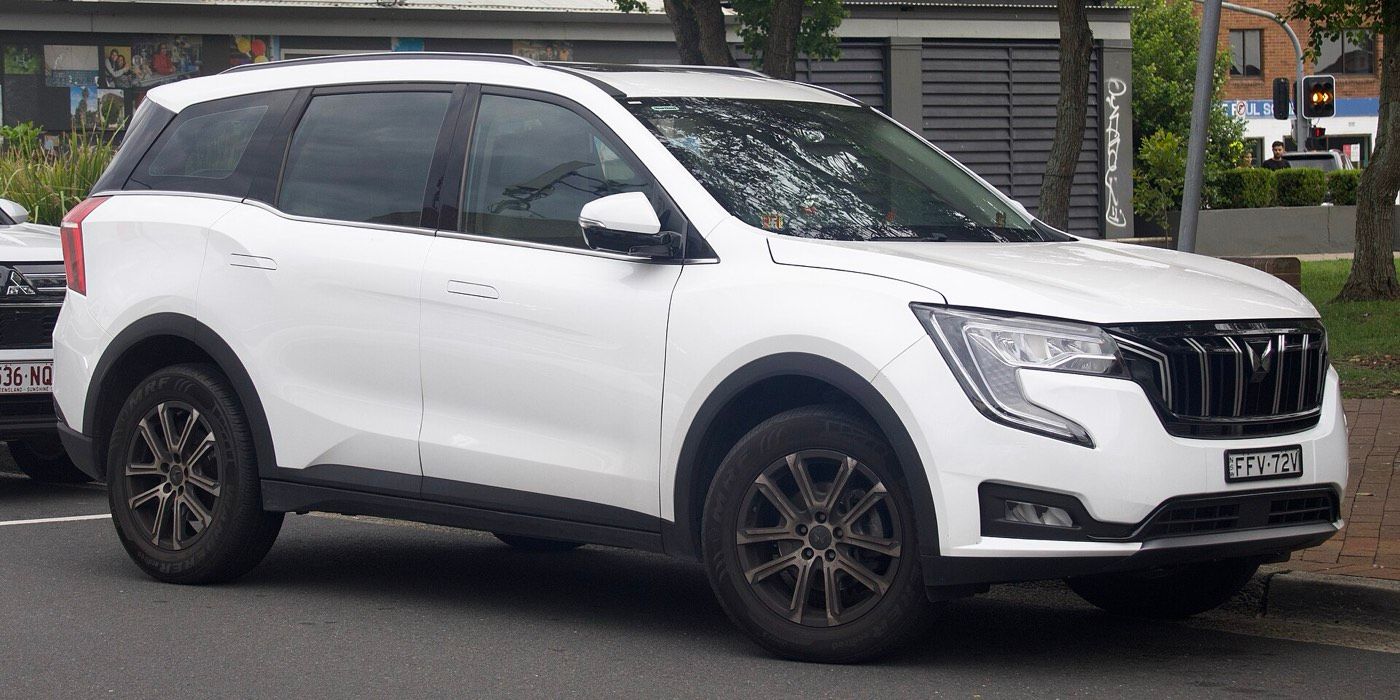
- Mahindra XUV700 ₹13.99 lakh

Editor & Publisher
Three letters have become a single feature in Indian car marketing, the way “alloy wheels” once was. They should not be, because the word names a category rather than a system, and the gap between two cars that both claim it is wider than buyers expect.
The hardware: two sensors and a decision
Almost every assistance system sold here rests on the same pair. A forward-looking camera high on the windscreen, behind the rear-view mirror, reads the world in two dimensions and is excellent at lane markings, road edges, signboards and the shape of the vehicle ahead. A radar behind the grille reads in one dimension but reliably: distance and closing speed, in rain, dust, night and glare. Neither is sufficient alone. A camera struggles with a stationary lorry at dusk; a radar cannot tell a parked car from a bridge expansion joint. Fusing the two, along with the wheel-speed sensors stability control already reads, is what decides whether the gap in front of you is closing too fast.
Add a rear-facing radar and you get blind-spot and cross-traffic warnings; add a camera that watches the road edge rather than the painted lane and lane-keeping gets far less fragile. One nameplate can carry two very different experiences by trim, which is why the specification matters more than the badge.
The functions, one at a time
Forward collision warning and automatic emergency braking are one system with two outputs: an alert, then a brake application if you do not act. It carries the strongest safety case here because it works when the driver does not; the city-speed save against a car braced in front is its most common intervention.
Adaptive cruise control holds a set gap to the vehicle ahead rather than a set speed. On a good expressway it removes most of the fatigue of long stints. Its character depends on how it handles a cut-in: one that brakes progressively is a pleasure, one that stampedes at any vehicle entering its corridor has you switching it off within a kilometre. Whether it works down to a standstill and resumes from one decides whether it is usable in traffic at all.
Lane-keep assist nudges or brakes when you drift without indicating. Lane centring goes further and actively steers to hold the middle of the lane, which requires the system to know where the lane is. That last clause is the entire problem in India.
High-beam assist is the least glamorous and often the most-used function on a poorly lit state highway.
Blind-spot, rear cross-traffic and parking assistance are warnings rather than interventions, cheap enough that their absence on a well-priced car is a decision, not an oversight.
Where it gives up
Assistance systems fail quietly, which is what makes them dangerous to over-trust, and the failure modes are consistent.
A lane is a statistical guess about paint. Indian roads range from freshly re-lined expressways to roads where the marking ended a kilometre back and the lane is the space between two parked trucks. Confronted with either extreme, a centring system drifts toward whichever line it has decided is real. Riders in mixed traffic learn to straddle a marking deliberately — exactly the manoeuvre the system reads as an error.
Two-wheelers are harder. A camera trained on box-shaped vehicle silhouettes will find a motorcycle at night later than it finds a car, and a rider filtering into the gap ahead is a cut-in that adaptive cruise may accept as an obstacle and shed a second later. Radar handles the metal better than the camera handles the shape.
Then the mundane ones: a heavy monsoon blinds a camera the way it blinds you, a fogged windscreen over the housing takes the function away with nothing but a small dash icon to say so, and sun glare on a west-facing road at dusk is a genuine sensor-failure condition. A camera disturbed by a stone, or sitting behind an aftermarket windscreen nobody recalibrated, is a system silently disabled.
ADAS is not a safety feature so much as a second pair of tired eyes. It is very good at the thing it was trained for and it has no idea what to make of anything else.
What the rules say, and how that reaches you
India regulates vehicle equipment through type approval under the motor vehicle rules, using the Automotive Industry Standards. The shift over the past few years is that automatic emergency braking has moved from an optional fitment on top variants to a requirement being phased in for new passenger-car types, and the domestic crash-test programme now scores driver-assistance equipment alongside structure and airbags. For a buyer that means two things: a car without AEB is becoming an outlier rather than a trim decision, and a good star rating and a working assistance suite increasingly arrive together.
What regulation has not done, anywhere, is turn these into self-driving systems. The international category sold as level two describes a car that steers and accelerates in parallel with a human who must supervise continuously, and every system fitted here sits inside that definition. A brochure implying otherwise is describing a legal position, not an engineering one.
There is a third consequence. A bumper or windscreen carrying sensors is a calibration item rather than a trim part, so a repair that was once a body-shop afternoon now needs a workshop with the equipment to aim a camera again. Ask whether the dealer network near you does that work; if it does not, an accident will quietly take your emergency braking away with it.
The check list
Exactly one car in our catalogue lists the full suite, and only from a trim well above the mid-bracket, which is a fair picture of the market: the technology is real, it is arriving, and it is not yet standard.
So read the box rather than the headline. Does the car have radar as well as a camera? Does adaptive cruise work to a standstill and resume? Are automatic emergency braking, lane-keep assist and forward-collision warning listed individually, or lumped together? Can the speed-limit assist read signboards, which only a camera can do, or does it take a GPS guess? Is calibration and software updating available at a workshop near you? And on the actual model being shown to you: can each function be switched off, and does the car remember your choice after a restart?
A car that answers those questions well is worth the money on a highway-heavy year. One that only has the letters is a paint job with a camera.
Frequently asked questions
Does ADAS mean the car drives itself?
No. Every system sold in India today is a driver-assistance system: it steers, brakes or accelerates alongside you and expects you to correct it. The moment the hands-off question comes up in a showroom, that is the salesperson telling you something the engineering does not support.
Is ADAS worth paying for in India?
On an expressway, yes, and mainly for the two functions that act without your input: automatic emergency braking and the forward-collision warning that precedes it. On a city road with no lane markings and a bus lane to straddle, expect the lane functions to be switched off more often than on.
How do I know what a car’s ADAS actually includes?
Read the function list, not the badge. A car may advertise the three letters while fitting only automatic emergency braking and a high-beam assist, which is a different product from one with adaptive cruise, lane centring and a radar-and-camera pair working together.